
BeeCity Buzz: Want to Water Less and Save the Bees? Try Native Plants!
Written by Brad O’Brien at BeeCity Columbia
During this hot, dry summer, you’ve probably been watering your plants more than you would like, watching them die, or some combination of both. If you have plants that are native to our area, they should be struggling less than plants adapted to other climates, but even native plants can experience stress during unusually hot and dry conditions. As the climate changes, South Carolina is likely in for even hotter, dryer weather in the future, more dead plants, and higher water bills. Careful selection of plants can help.
A Prickly Situation! Or… Solution?
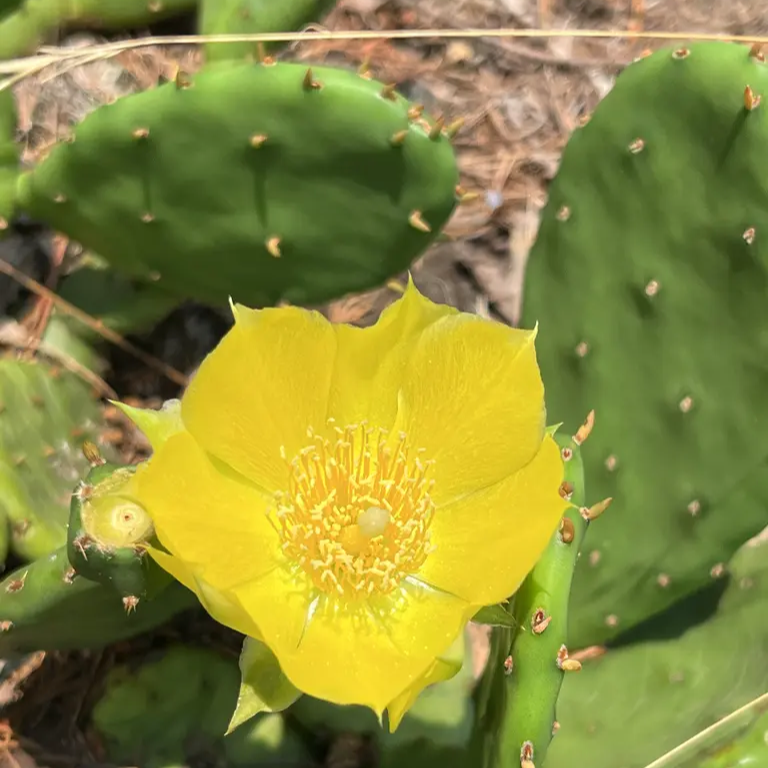
Eastern prickly pear is a native cactus that will thrive in sunny, dry areas where other plants struggle. It produces summer blooms that are visited by a variety of native bees. Image by bsyeets, iNaturalist CC BY-NC 4.0 license
If you’re expecting me to recommend cactuses, you’re not wrong, so let’s start there. Sunny, dry sections of your yard where nothing else can survive are good places to add cactuses—assuming there’s no concern of anyone getting pricked in these locations! The eastern prickly pear is a variety native to South Carolina, which means in addition to thriving in hot, dry summers it can also tolerate cooler weather in the winter. The common name eastern prickly pear is used to describe at least two different species, and the one native to the SC Midlands is Opuntia humifusa. As you would expect from a cactus, this plant is extremely hardy. It also produces summer blooms that help support our native bees.
This highlights a key point: native plants that support our native pollinators are also adapted to the local climate. Once established, care requirements are minimal. By installing native plants for native wildlife, you’re also helping to ensure the plants in your yard can survive South Carolina summers without extensive watering. As summers get hotter and dryer, it is worth considering native plants that are particularly drought tolerant.
Love Your Local Pollinators
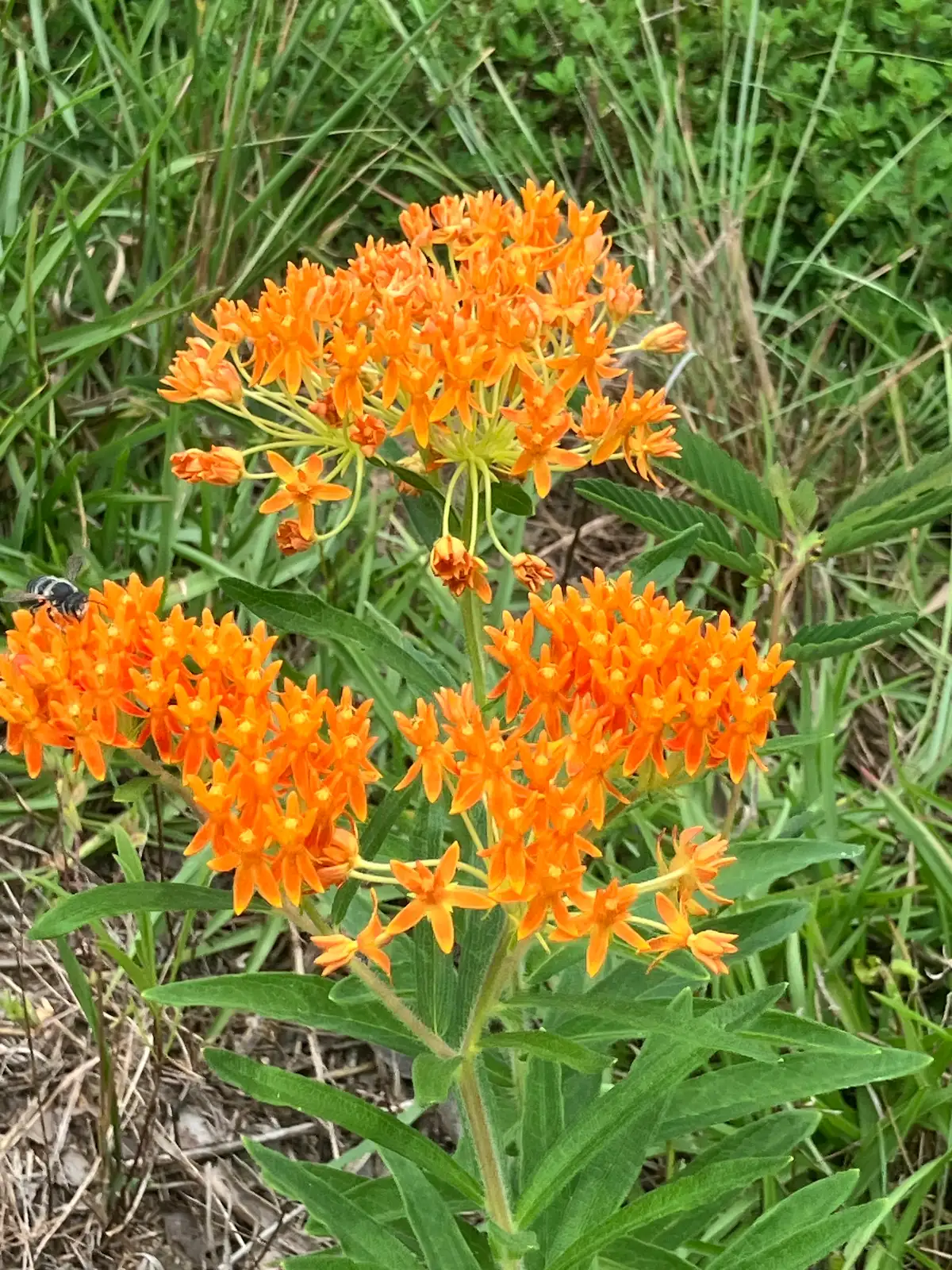
Drought-tolerant butterfly milkweed will feed bees and butterflies with beautiful orange blooms throughout the summer. This plant has never received supplemental irrigation, and it is thriving. Photo taken in late July 2026. Image by Brad O’Brien
But don’t worry, you don’t have to fill your yard with prickly pears! They are one of many options to consider. Another great one is butterfly milkweed (Asclepias tuberosa), which has deep tap roots, giving it greater access to water and providing drought resistance. It’s also a beautiful plant producing orange blooms throughout the summer, which attract bees, butterflies, and even hummingbirds. It also feeds the larvae of monarch butterflies.
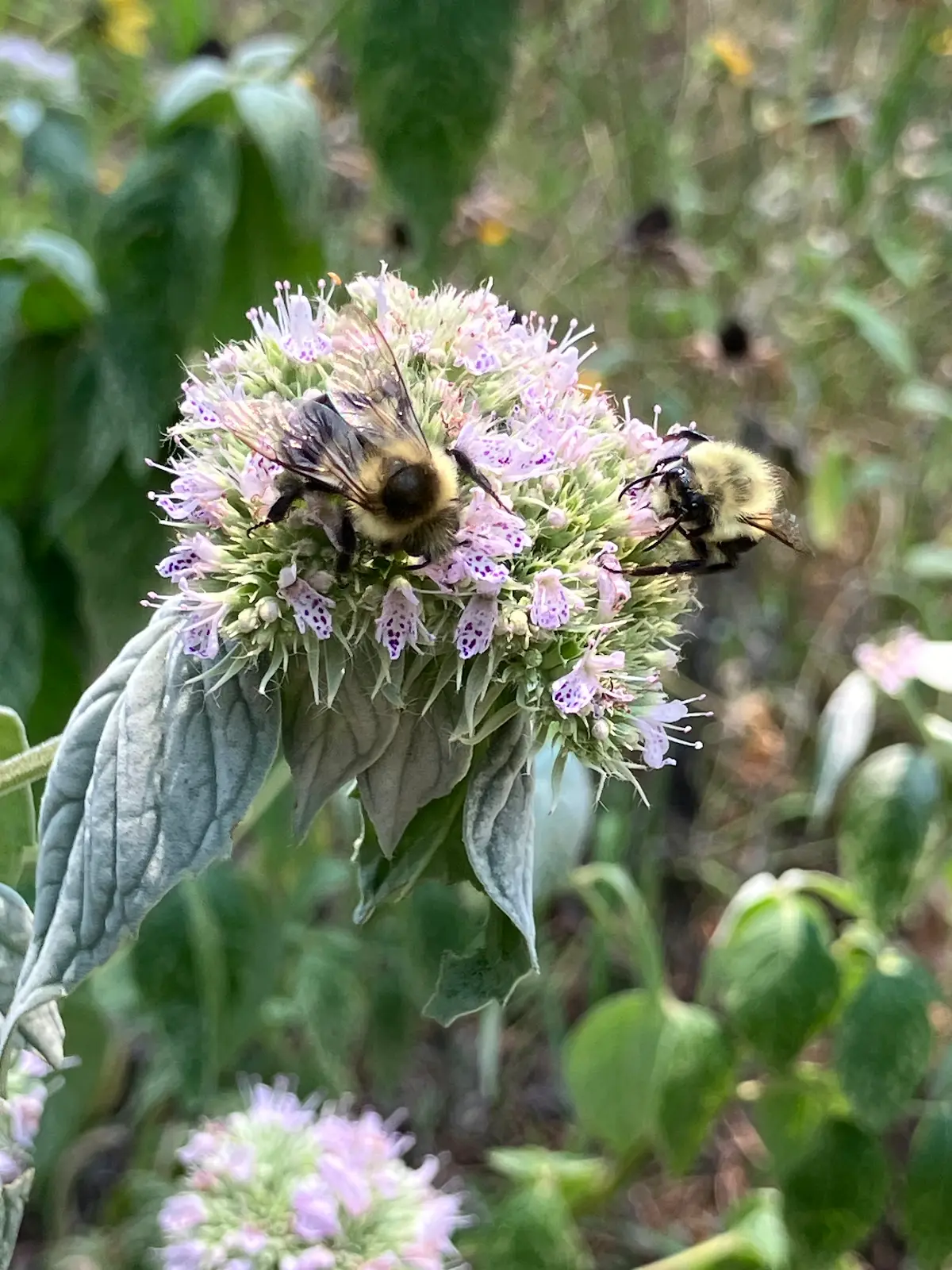
Bumblebees on a mountain mint plant that is watered only by the rain. Photo taken in late July 2026. Image by Brad O’Brien
Another highly drought tolerant plant loved by pollinators is mountain mint. These are plants in the genus Pycnanthemum, and one species native to the Midlands is Pycnanthemum muticum. Install it in your yard, and it will be covered in bees attracted to the blooms that last several weeks. Note that it can be an aggressive spreader, so plant it in locations where you’re okay with it expanding.
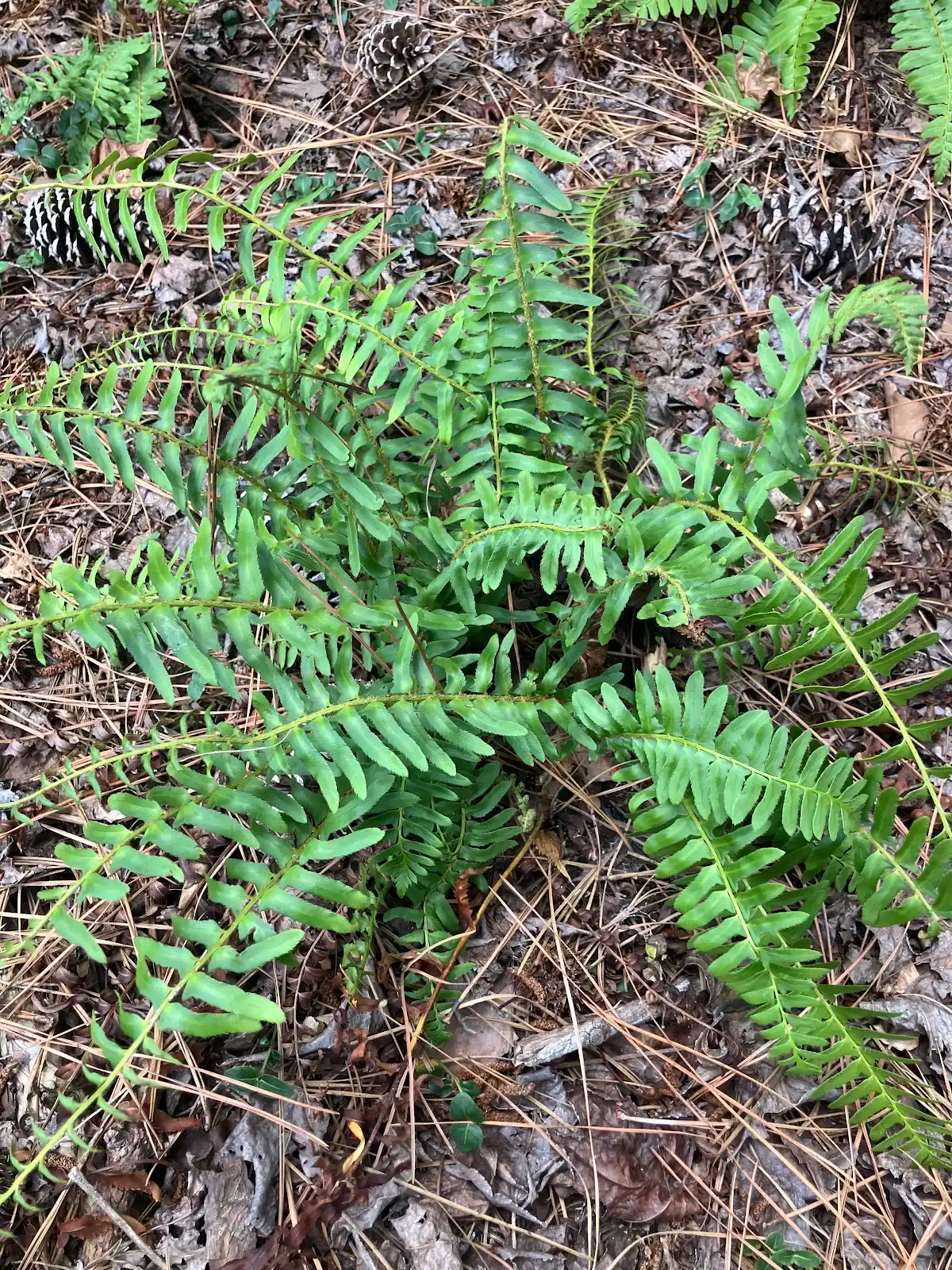
This evergreen Christmas fern is growing in partial shade, and it, too, depends entirely on rainwater. Photo taken in late July 2026. Image by Brad O’Brien
Goldenrod (Solidago) is another highly beneficial plant that can tolerate extreme weather conditions. Like mountain mint, it spreads, but if you have space for only a small patch, select showy goldenrod (Solidago speciosa), which does not spread as easily as other varieties.
All the plants described above thrive in full sun, but shady areas are also impacted by periods of high heat and little rain. For these sites, consider Christmas ferns, which need less water than other ferns and can even take some direct sunlight. They’re also evergreen and serve as a year-round ground cover, providing shelter for small wildlife.
Trees and Shrubs
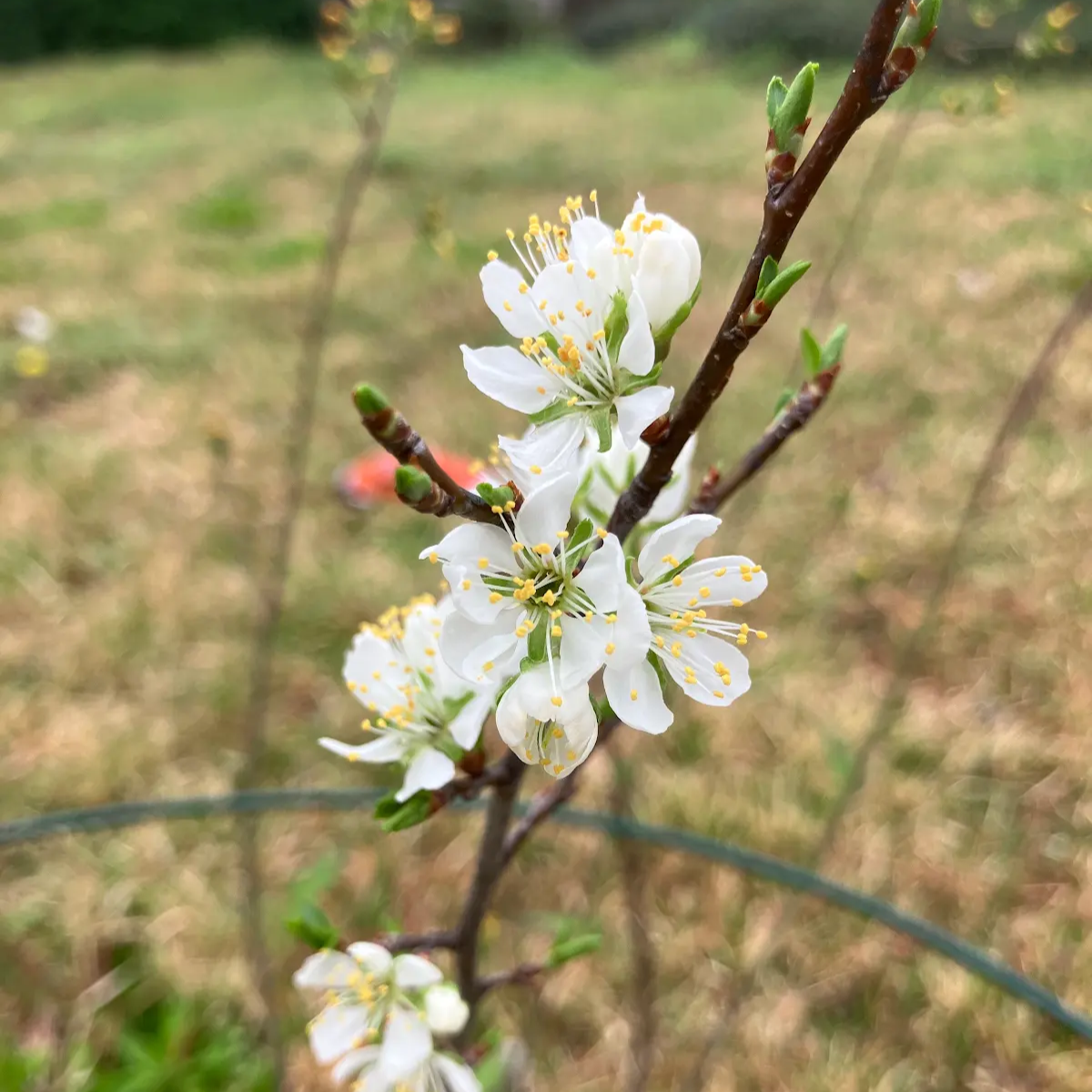
Blooms from an American plum tree. In addition to producing fruit loved by humans, plum trees are also important early sources of nectar for pollinators. Image by Brad O’Brien
Many native trees and shrubs can also tolerate long stretches of hot, dry weather, oncethey become established. Trees, of course, can also add shade, helping to create shelter from the heat. If you have the space, consider adding a native shade tree. (You can even request a free one from Columbia Green! For details, see Beat the Heat.) If space is more limited, try American beautyberry or arrowwood viburnum, both of which are drought tolerant once established. Their flowers support bees, and they produce berries that feed birds. Viburnum is also an excellent caterpillar host.
Next Steps and Guidance
ative plants you could add to your yard. For more guidance, check out Planting for Climate Resilience, published by the Wild Seed Project. It is written for landscapes in the northeast, but while some of the plants included might not be native to SC, the excellent discussion of resilience principles applies to all landscapes.
Adding even a few drought-tolerant plants will make your home landscape more sustainable, reduce your water bill, and help ensure at least some of your plants can survive our hotter, dryer summers. You’ll also a be a good Bee City citizen, providing much needed resources for bees and other native pollinators.
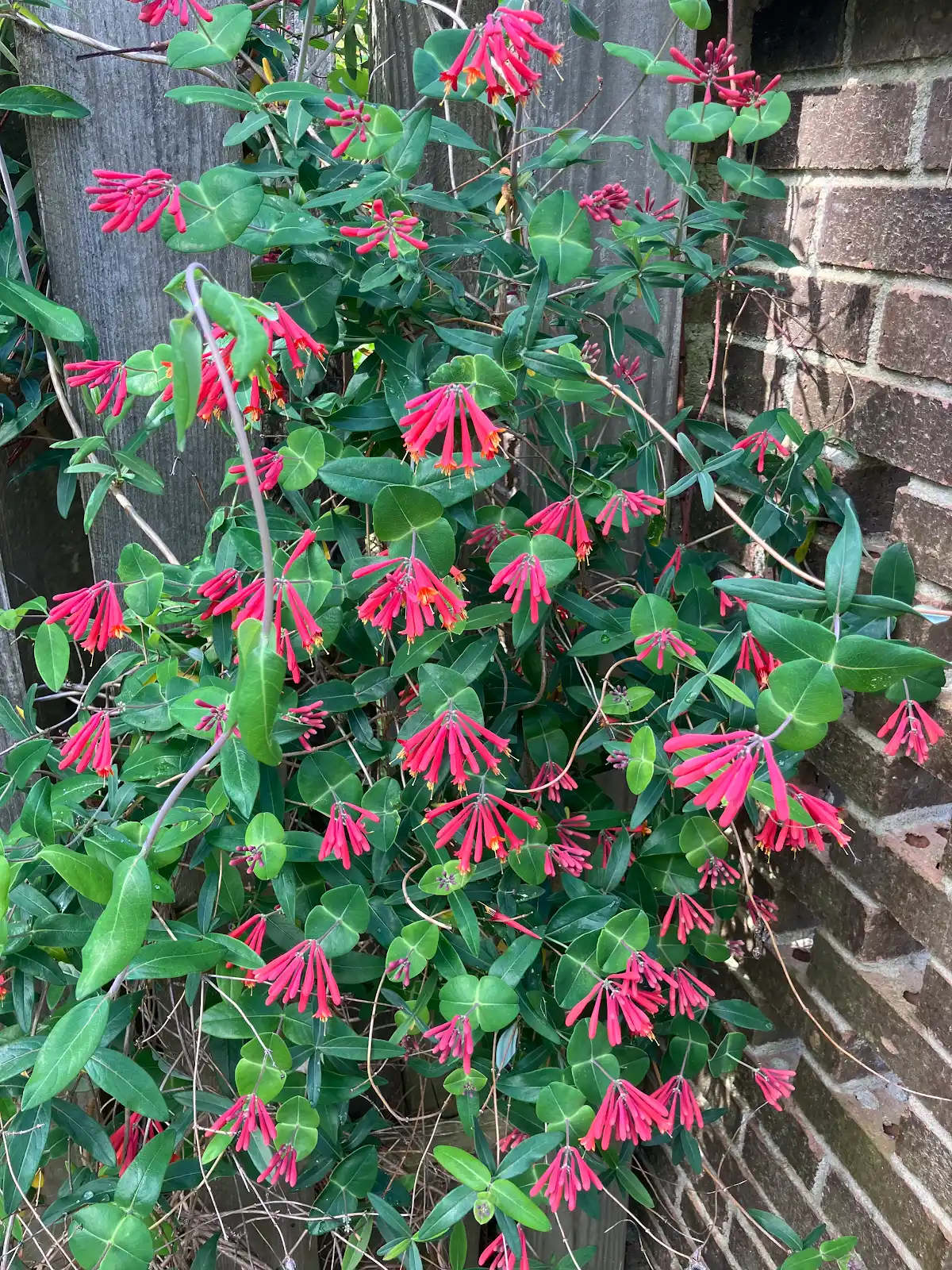
Native honeysuckle produces an abundance of red blooms starting in early March. Image by Brad O’Brien
