The Great Pollinator Census of 2026
by Brad O’Brien, BeeCity Columbia Committee
Our Insects are in Trouble
Of the many ecological crises our planet is facing, steep declines of insect populations is one of the least noticed. Worldwide, up to 40% of pollinator species may be at risk of extinction in the coming years. In North America alone more than a quarter of bumble bee species are in decline. The State of the Butterflies report published in 2025 found that butterfly populations in the United States declined by more than 20% between 2000 and 2020.
Why we Should Care
Although their important work is often unnoticed, pollinators and other insects provide a wide variety of ecosystem services that directly benefit humans. The most obvious example is pollination, which is essential to food production. By some estimates, 1 out of 3 mouthfuls of food and drink we consume depends on pollinators. The role of insects in decomposition of organic matter is also generally appreciated. Dung beetles help ensure we’re not drowning in poo. A variety of other insects consume dead plants and animals, breaking down organic matter and enhancing the soil in the process. A less understood service they provide is pest control. Dragonflies eat mosquitoes. Lady beetles each aphids. Wasps eat flies and caterpillars, and some species are parasitic, using other insects as hosts, helping to control populations that can become pests.
(At right: Goldenrod buzzes with activity in August, when it’s an important late-season source of nectar for bees and butterflies. Several small bees are visiting the goldenrod flowers in this video. To collect useful data for the census, it’s not necessary to identify the exact species. You can simply count them as small bees. Select goldenrod as your plant to monitor for the census, and you’ll see lots of activity!) Video credit: Brad O’Brien.
Take a Minute to Notice
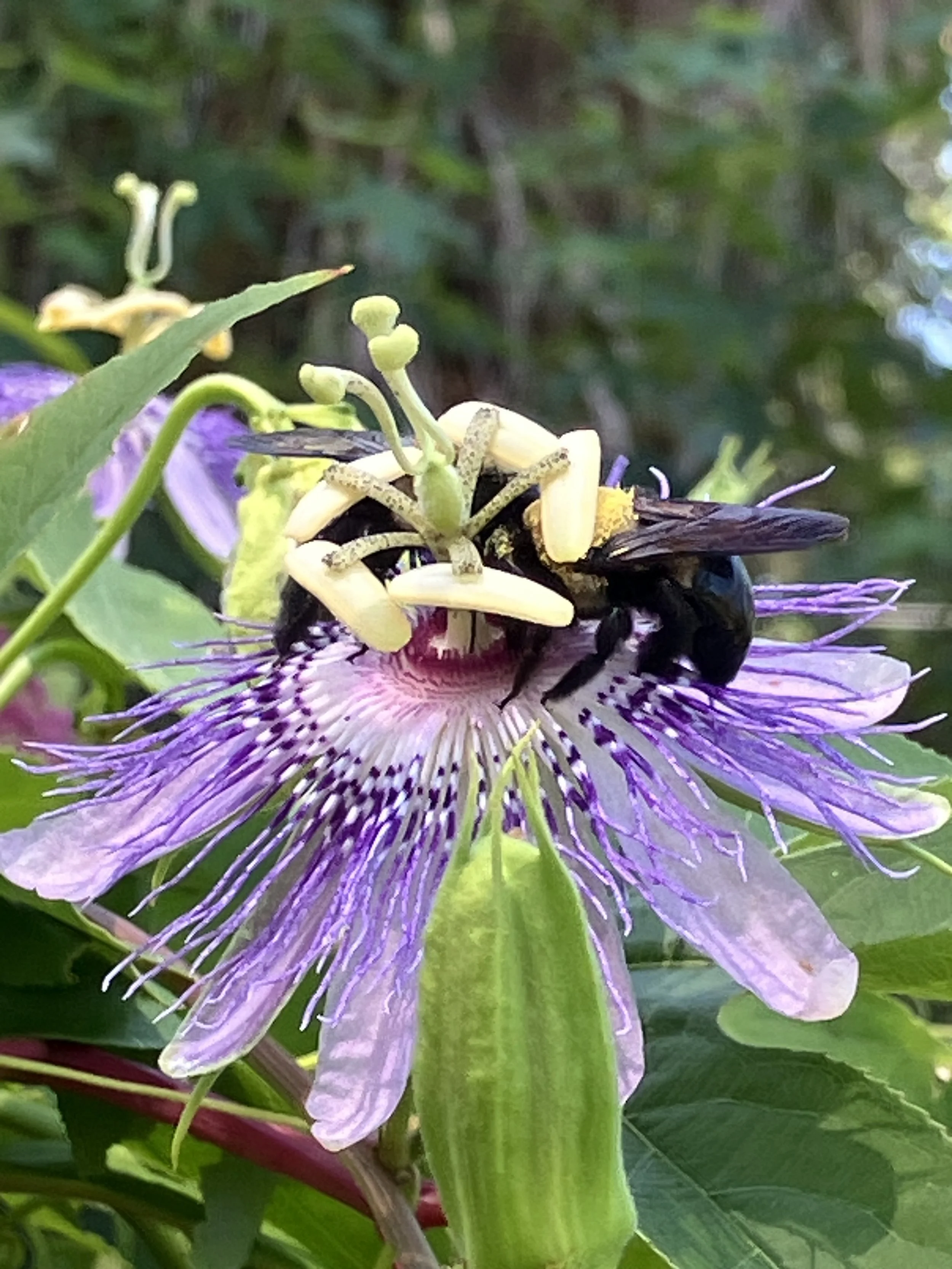
Passionflower is another common plant you’ll see blooming in late August. Notice that the bee visiting this flower is large with a shiny abdomen. This identifies it as a carpenter bee. Photo credit: Brad O’Brien
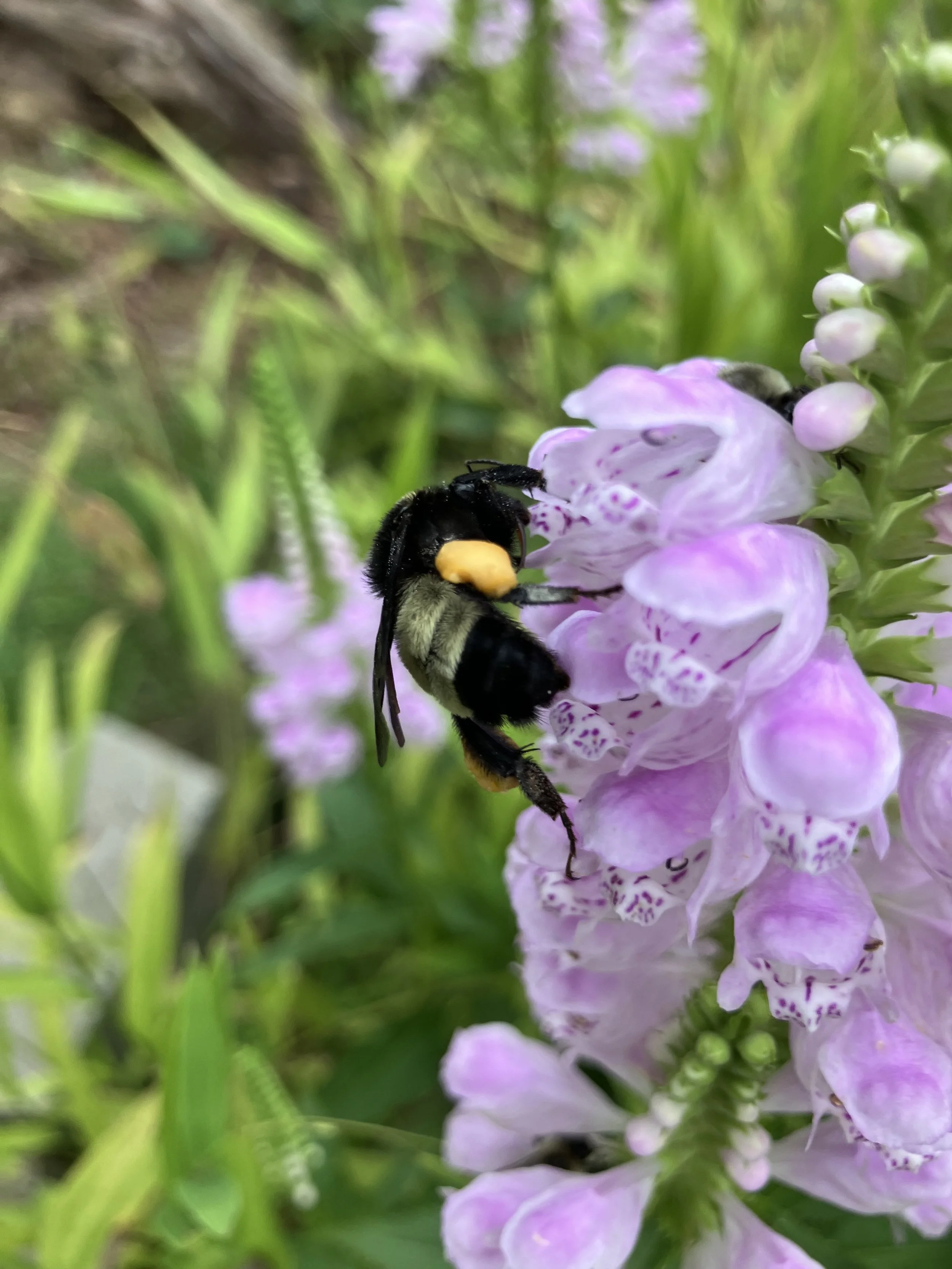
Obedient plant flowers are another late-season favorite of bees and other insects. In this photo, a bumblebee is visiting the flowers. You can tell it’s a bumblebee from the fuzzy abdomen. Photo credit: Brad O’Brien
Most of us like to eat, avoid stepping in poo, and walk outside without being bitten by mosquitoes, so how can we show our appreciation for beneficial insects? An easy first step is to take a minute to notice them. A great opportunity to start is by participating in the Great Southeastern Pollinator Census. This census uses a simple methodology that makes it easy for anyone with access to flowering plants to participate. In collaboration with community partners, Bee City USA – Columbia is hosting multiple census events around the city August 21 – 22.
Three Ways You Can Help
At this point, you might be thinking, “Cool, but we’re losing millions of bees and butterflies, how will this help?” I’ll respond by quoting Rebecca Solnit, a tireless advocate for not losing hope: “The fact that we cannot save everything does not mean we cannot save anything and everything we can save is worth saving.”
Here are three ways you can help save pollinators by participating in the census:
Collect important data. Data collection isn’t just for professional scientists. We can all help by serving as citizen scientists. The more data that’s collected on insects the better. It helps researchers understand population trends and identify specific actions for protecting pollinators.
Learn and observe. The census is a fun opportunity to observe insect behavior and learn more about the wide variety of insects doing important work to sustain our ecosystems. It can also help participants come away with a new perspective on bugs, a greater appreciation for their importance, and a commitment to doing what they can to protect them.
Build the community. Columbia has a growing community dedicated to pollinator conservation, and you can help expand it by participating in the census, sharing what you learn, and helping others understand the importance of insects and why they need our help.
Common Questions
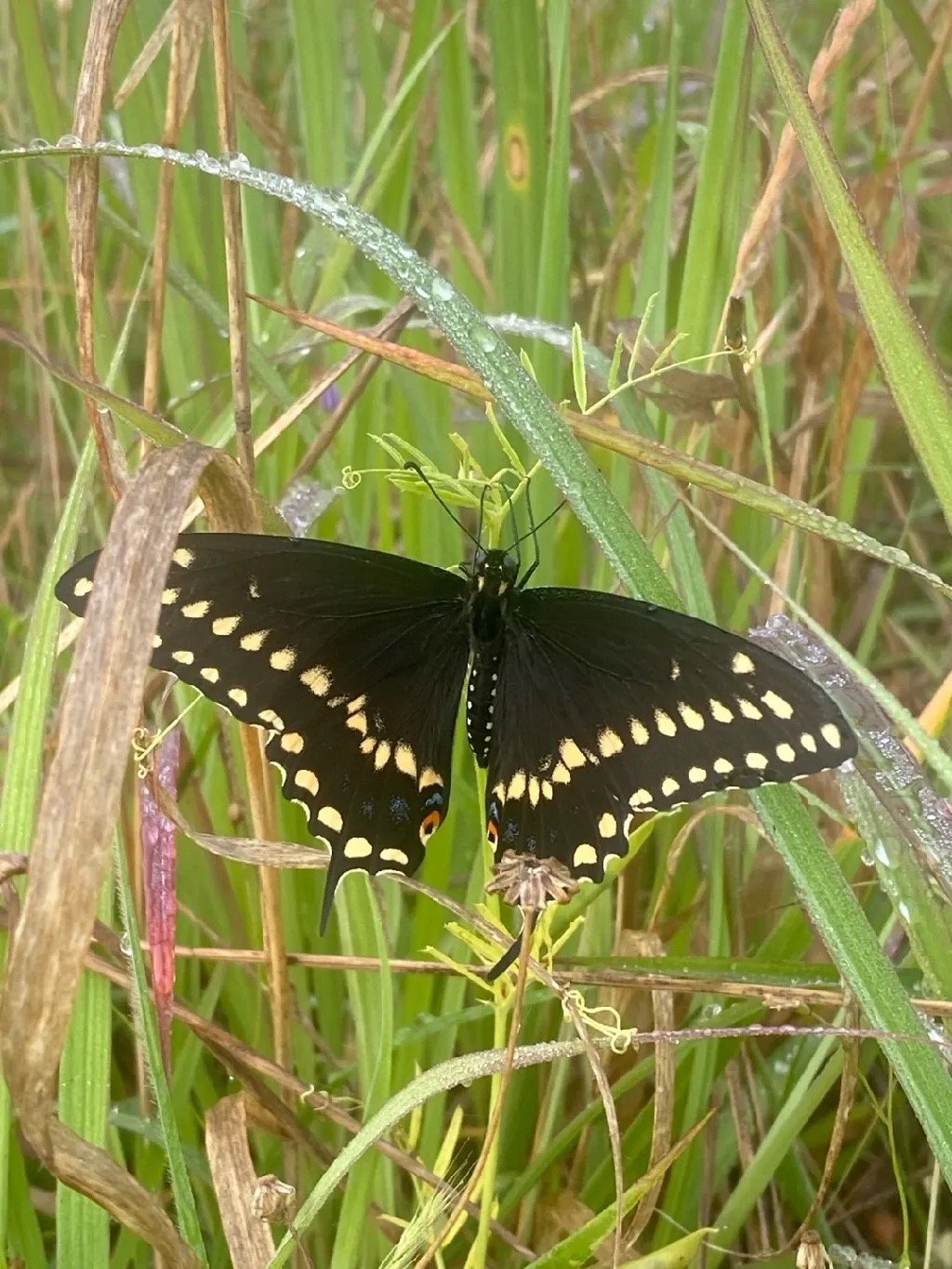
Black swallowtail butterflies are common in later summer. If you see one during the census, enjoy it and simply count it as a butterfly! No need for a species-level identification. Photo credit: Brad O’Brien
If this sounds like a fun way to help pollinators, but you’re still hesitant, here are answers to a few common questions:
Will I get stung? Unlikely. You’ll be observing bees buzzing around flowers, and their primary concern will be collecting pollen or feeding on nectar. If they notice you at all, you’ll be an obstacle to avoid, not a target to sting.
What if I’m bad at identifying bees? You’ll be in good company. Most of us can’t tell the difference between a sweat bee, a mining bee, and a leafcutter bee. But we can determine whether a bee is fuzzy, shiny, large or small, and that’s really all you need to know to help collect valuable data on bees. Friendly volunteers will also be available to help and answer questions at all the events.
For more information about the census events, see the City of Columbia’s Bee City page. Wherever you decide to count, please join us at the Rosewood Community Orchard on the evening of August 22 for a potluck and afterparty!
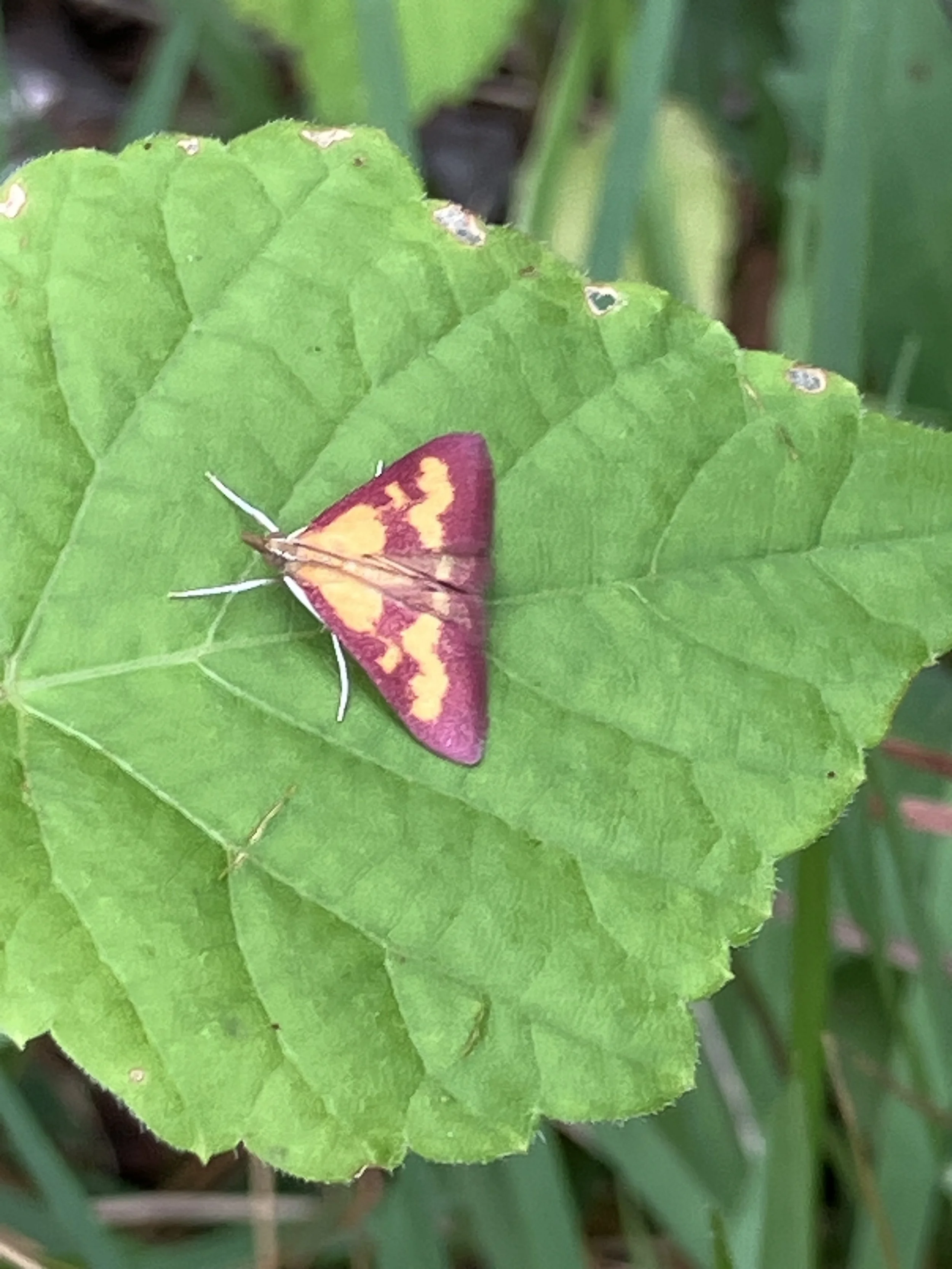
Moths are typically associated with the night, and most of them are nocturnal, but some are active during the day, like this beautiful southern mint moth. How can you determine whether it’s a butterfly or moth? It’s not always easy. Moths often have feathery antennae, but that won’t help you with this small moth. For the pollinator census, just count as “butterfly/moth.” Photo Credit: Brad O’Brien