
Simple Ways to Reduce Rainwater Runoff in Your Home Landscape
By Megan Lambert, ACH Landscape Supply of Woodstock, Georgia
Edited by Jennifer Young, Columbia Green
Rainwater management is about slowing water down and giving it a better path through your landscape. This gives rainwater a chance to soak into the soil before it leaves your property as runoff. A few changes where it matters most can add up to major improvements in your home landscape.
Start with a Walk in the Rain
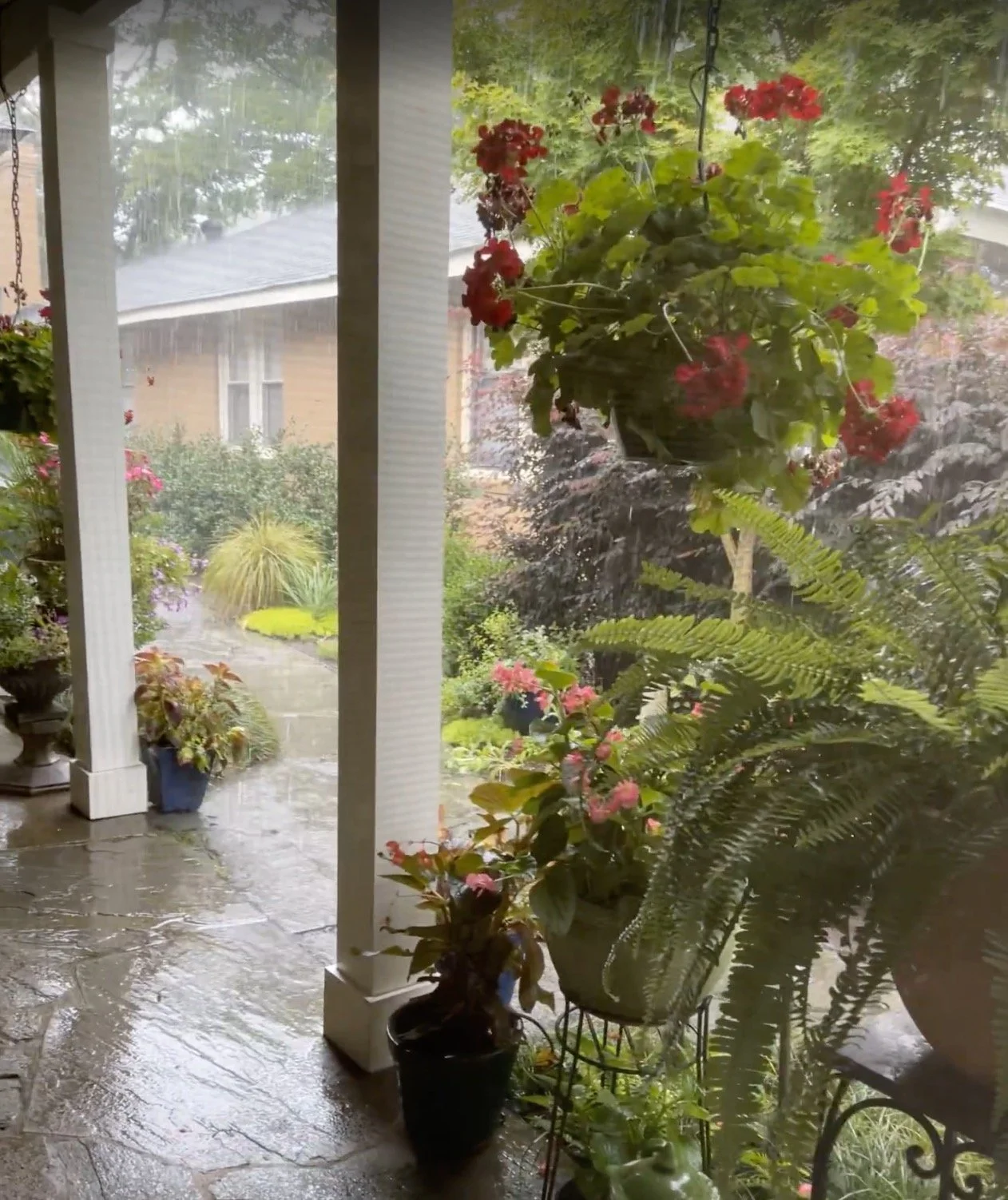
Taking a walk around your property during a heavy rain can help you understand a lot about how water moves in your landscape.
Photo Credit: Jennifer Young
You don’t need a major landscape project to understand how water moves through your yard.
The next time a decent storm comes, grab an umbrella and take a walk through your yard. Watch the roof, gutters, downspouts, driveway, lawn, and planting beds. Notice where water rushes and where it stops.
Follow the water that comes off the roof. Check the drainpipes and downspouts. Follow the streams moving along the driveway, across the lawn, or beside the planting beds. You might be surprised how far that water gets once it starts moving.
That short walk will tell you more about your drainage than a dry-weather inspection. Once you know where the water is coming from and where it wants to go, you can make better decisions about soil, plants, grading, and hard surfaces.
Let’s Talk About the Hard Parts
Especially on smaller urban lots, hard, impervious surfaces like roofs, driveways, and sidewalks collect water and dump it in huge amounts into tiny spaces in your yard. So start by noticing where all that water is going now.
Slowing Down Roof Runoff
A roof sends an amazing amount of water to the ground, where it all flows downhill to some sort of catchment, whether that be a drain or a driveway or a planting bed.
Trace where it goes and think about whether there is a better way to divert it to allow more of it to soak into your soil before it runs off. For example:
Downspouts can be extended or redirected to let water discharge into a part of the landscape where it can be absorbed.
Rain barrels can collect water and hold it for later use. Right now, you can get rain barrels at a discount from the Rainwater Solutions, a partnership between Columbia Water, Richland County Stormwater, and Historic Columbia
Rain chains placed in roof valleys can direct water into a drain or flow into a vessel or…
Dry streambeds lined with stone that divert water toward areas where you want it to go.
A Photo Gallery of Ideas for Roof Runoff
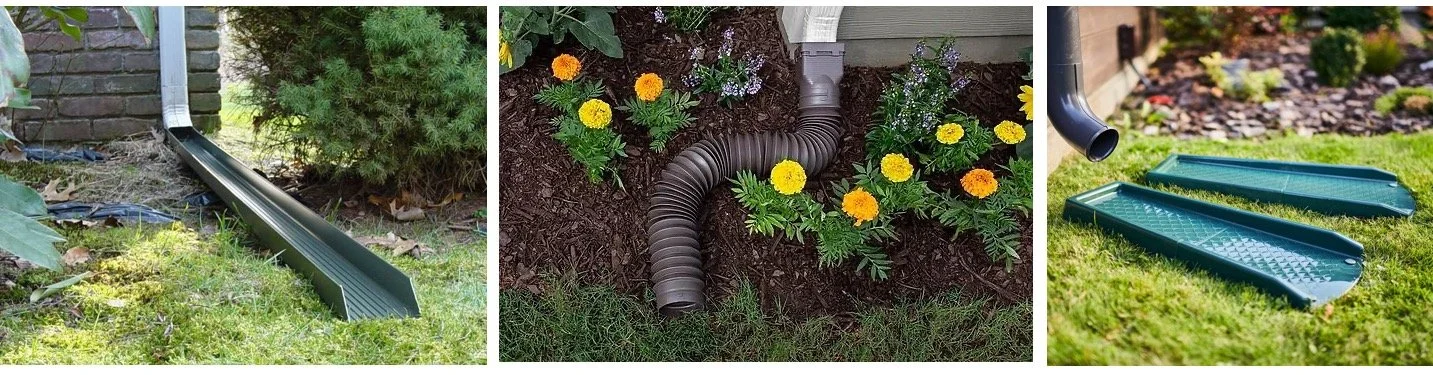
1. Downspout Extensions and Diverters move water away from your home and into the landscape where it can be absorbed.
Photo Credit: Google Search
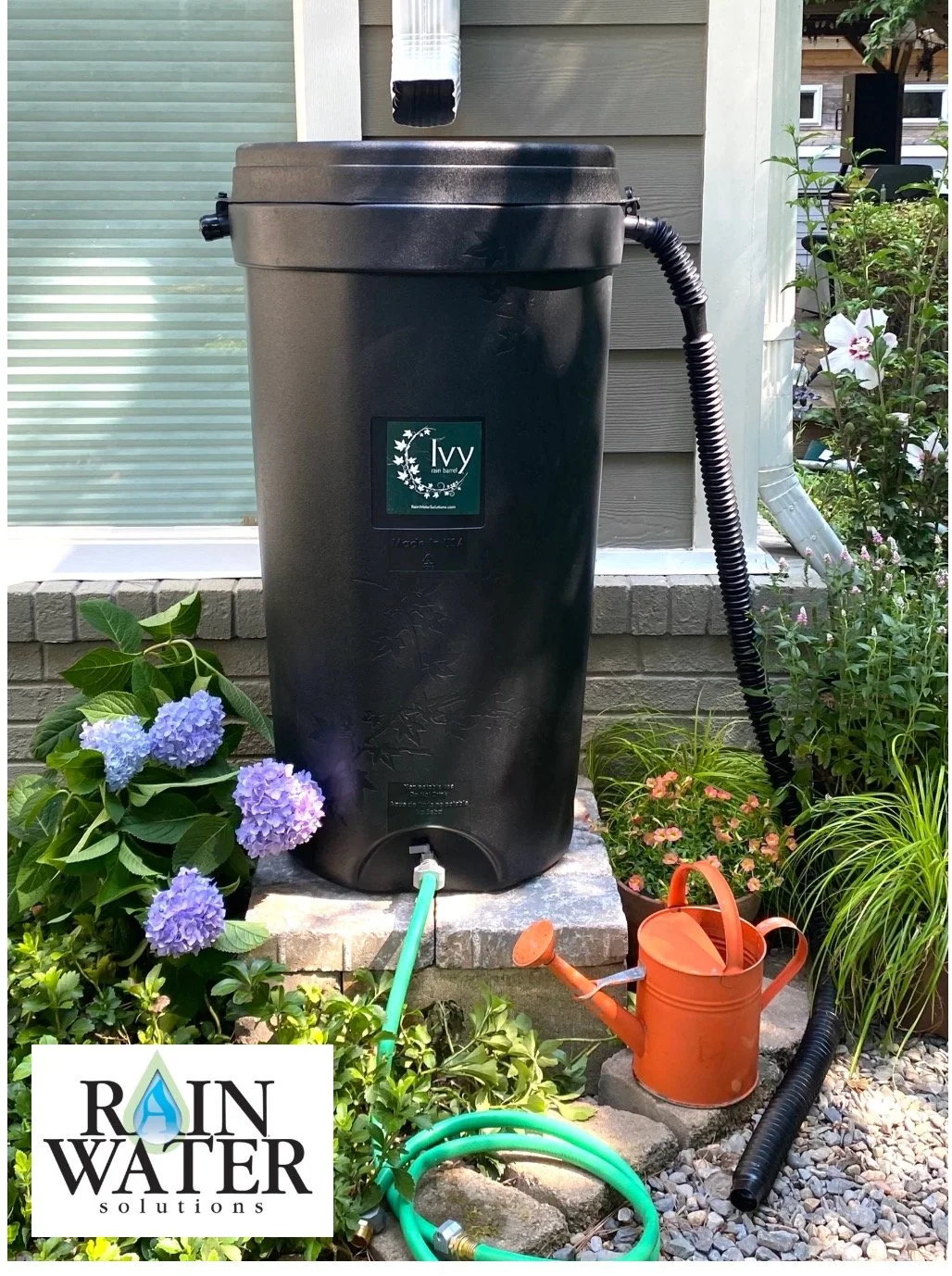
2. Rain barrels can collect water and hold it for later use.You can get rain barrels at a discount from the Rainwater Solutions,
Photo Credit: Rain Water Solutions
3a. Rain Chains are an effective way to channel water to the ground where it can be caught and diverted. This rain chain funnels water into a clay vessel that has a hole cut in the bottom of it to fit over a drain that sends water to the back of the property to a bubbler which allows water to flow our of the yard and toward the street.
Video Credit: Jennifer Young
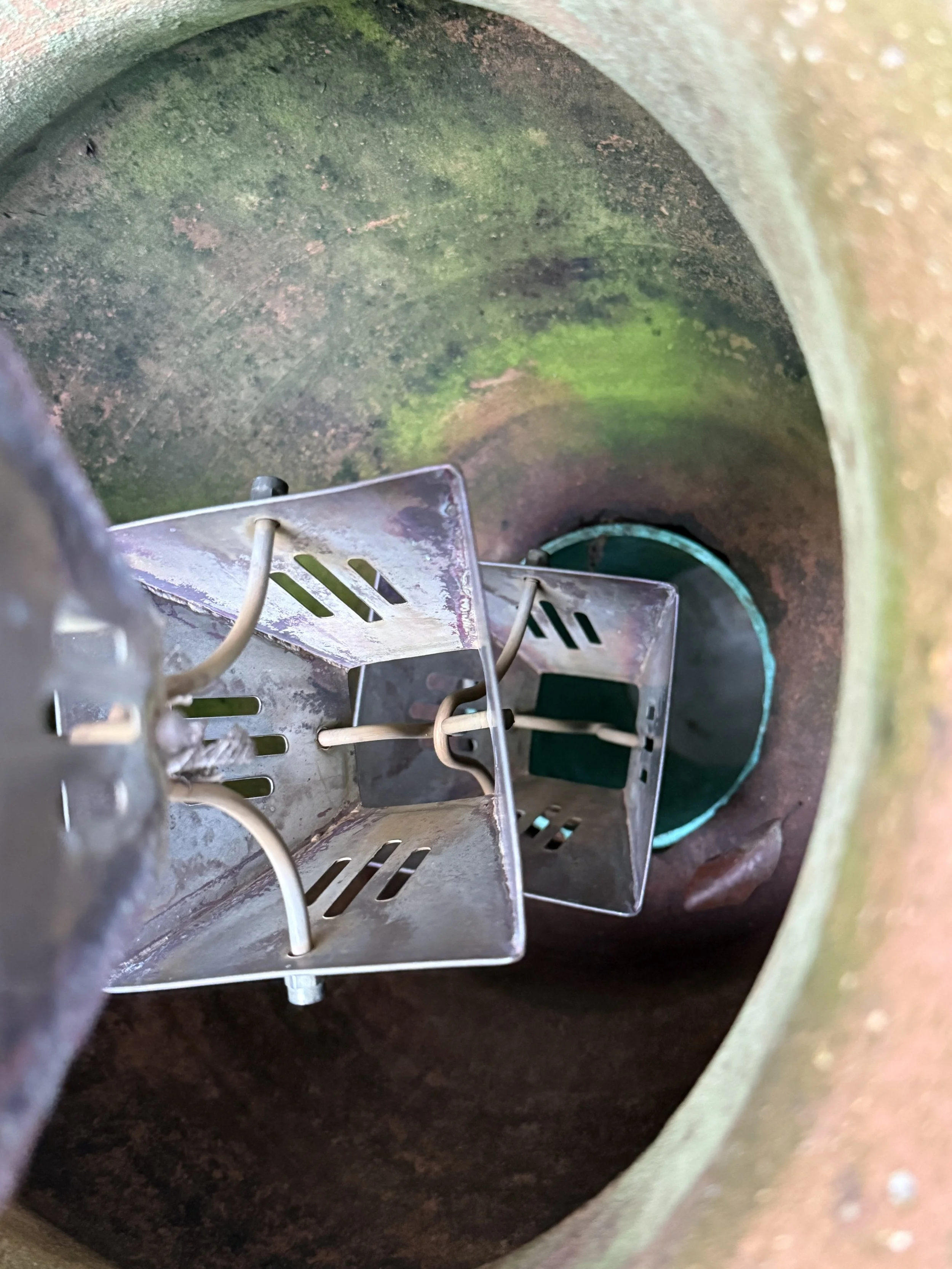
3b. Close up of the bottom of the vessel which fits over the drain.
Photo Credit: Jennifer Young
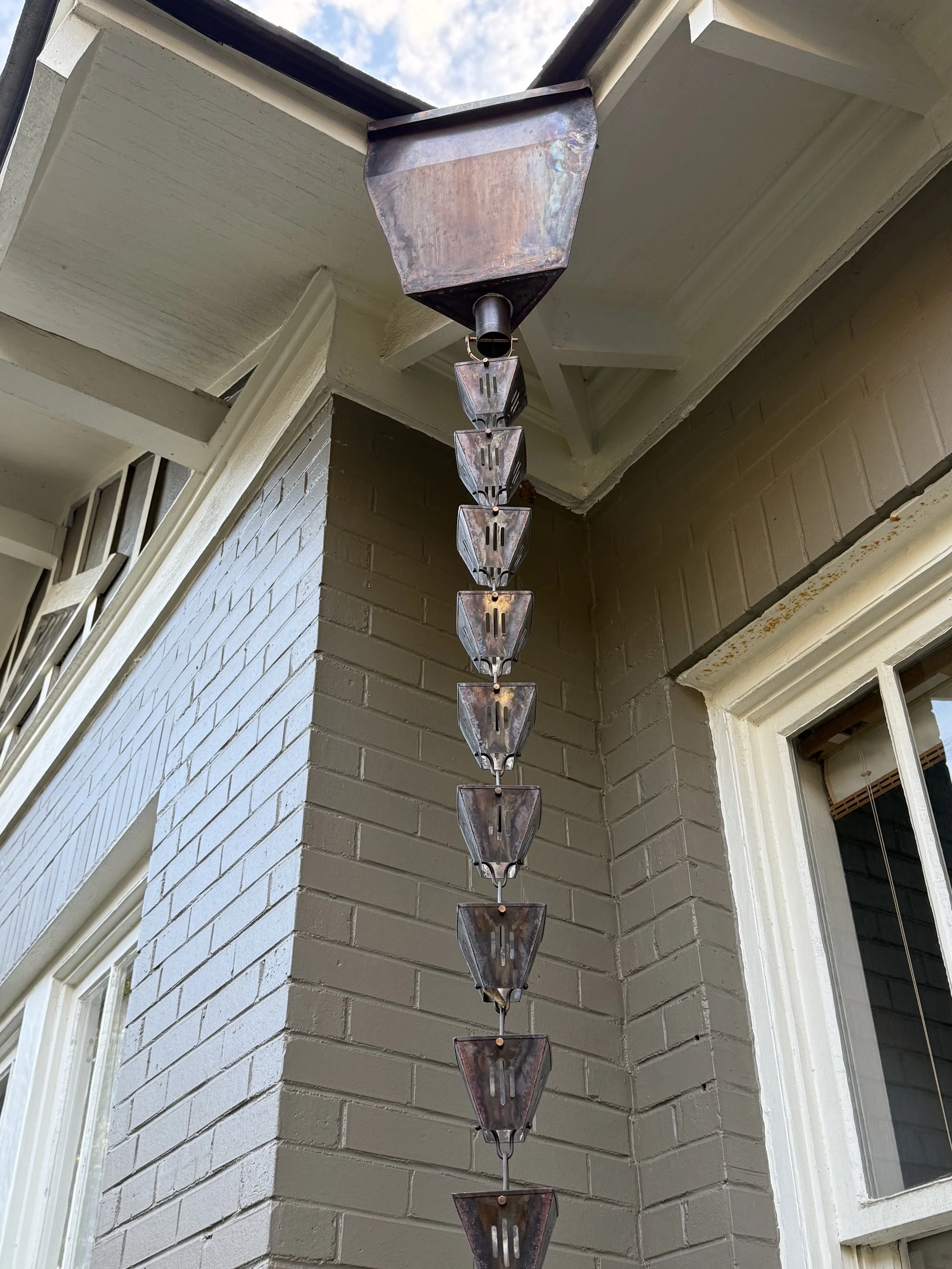
3c. Roof Valley Catchment System. While water at the back of the house is funnelled through gutters and a downspout to the rain chain, the rain chain at the front utilizes a roof valley catchment. The rain chain is attached to the bottom of the catchment and feeds water into a vessel below that diverts water toward the driveway and away from the house.
Photo Credit: Jennifer Young
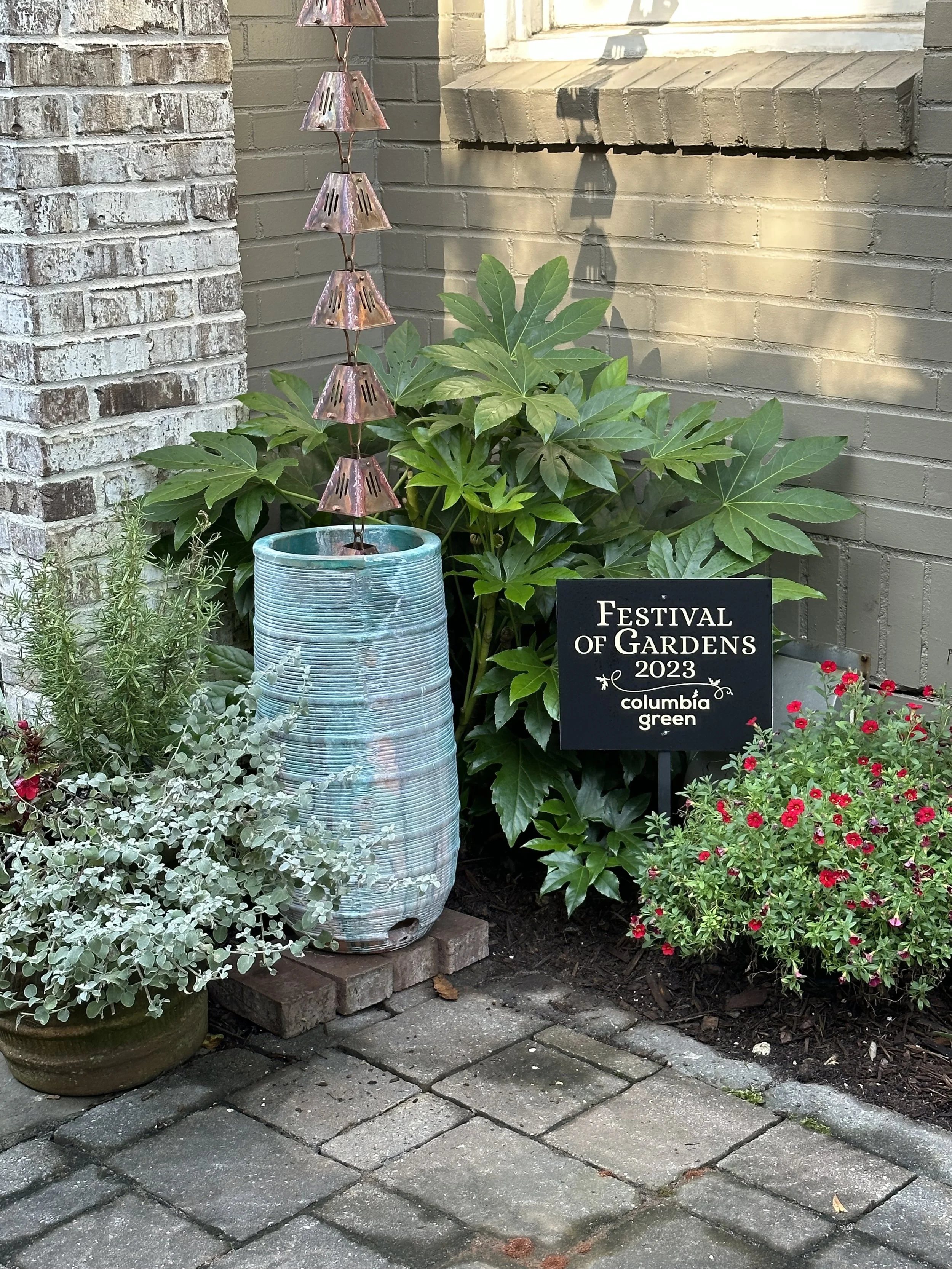
3d. Vessel with Hole to Divert Water. The rain chain hangs down about halfway into the vessel. A hole cut into the side bottom diverts water away from the house.
Photo Credit: Jennifer Young
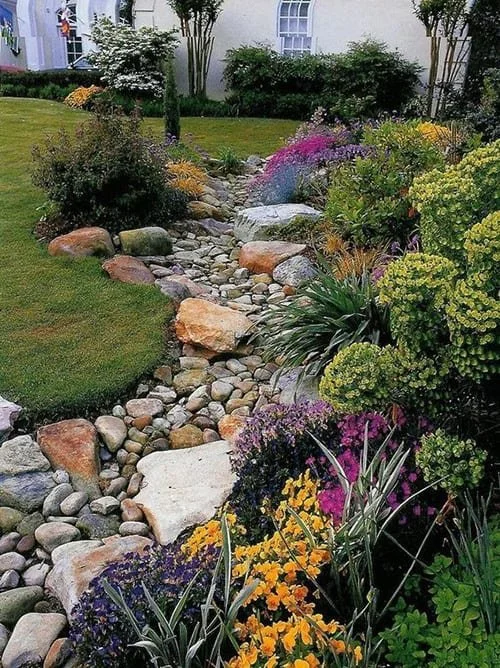
4. A Dry Stream Bed. This planting bed features a dry stream bed along its side. Notice that the yard slopes down from the house so during a heave rain, water is channelled across the yard and into the bed. Large rocks protect plants from washouts during a heave rainstorm.
Photo Credit: https://wickistone.com/what-is-a-dry-stream-bed/
Slowing Down Water across Paved Surfaces
Once water hits the ground, hard surfaces like driveways, patios, and walkways cause it to run off quickly. Adding even small strips of planted areas alongside paved areas can allow water to absorb rather than run off.
If you are putting in a new walkway or patio, take a look at how much of the area really needs to be paved and consider using permeable pavers and other porous surfaces to let some rain move through the surface instead of across it. When installing these porous paved areas, it is important to think about what sits underneath because the underlayment matters just as much. Permeable paving needs proper base soil and site conditions to drain smoothly, so talk with your landscape designers and suppliers about best practices.
A Photo Gallery of Permeable/Porous Paved Surfaces
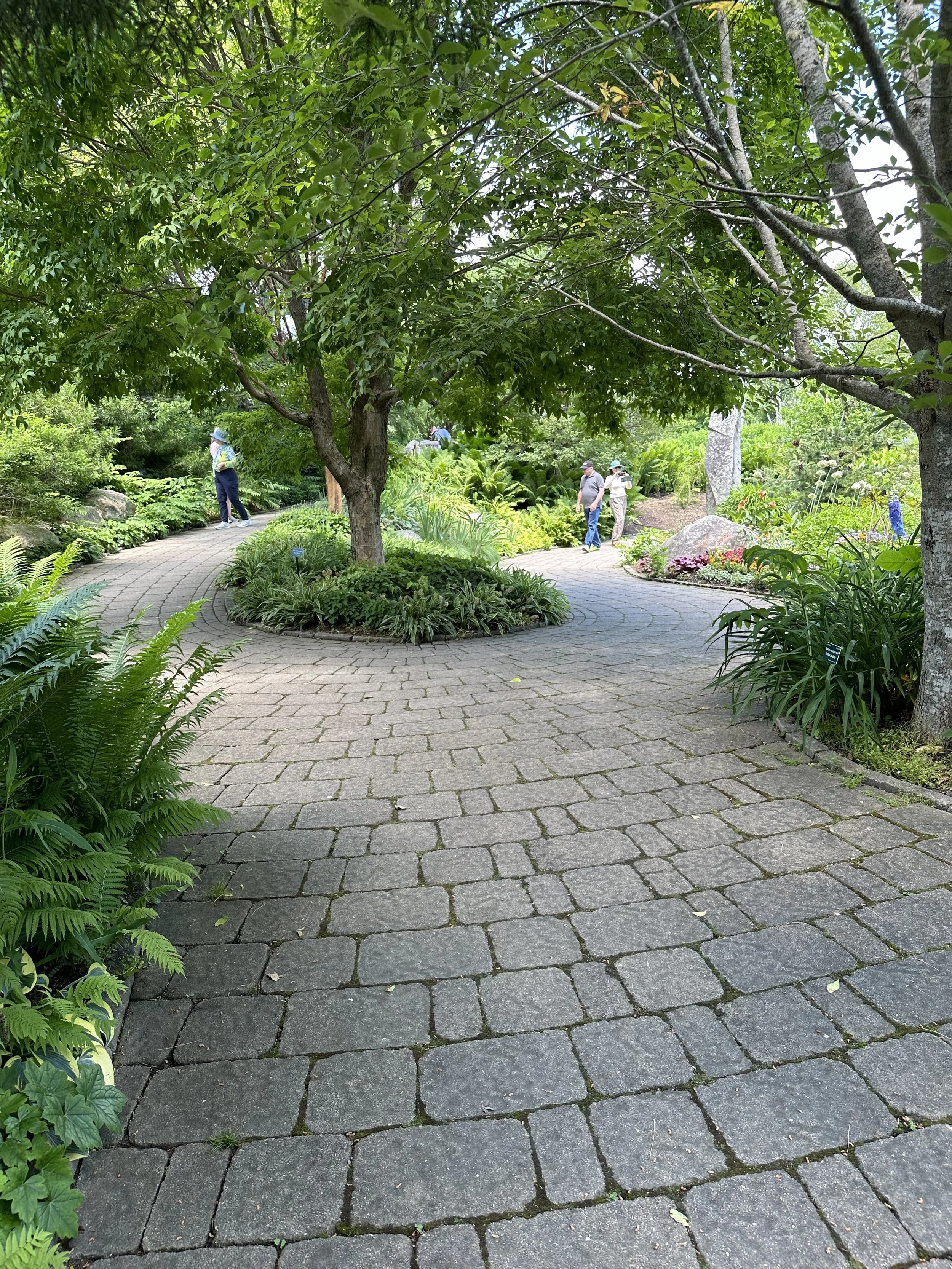
This pervious cobblestone walkway is in the Boothbay Botanical Gardens in Maine. It is laid over a packed cinder surface allowing some water to infiltrate to the ground below.
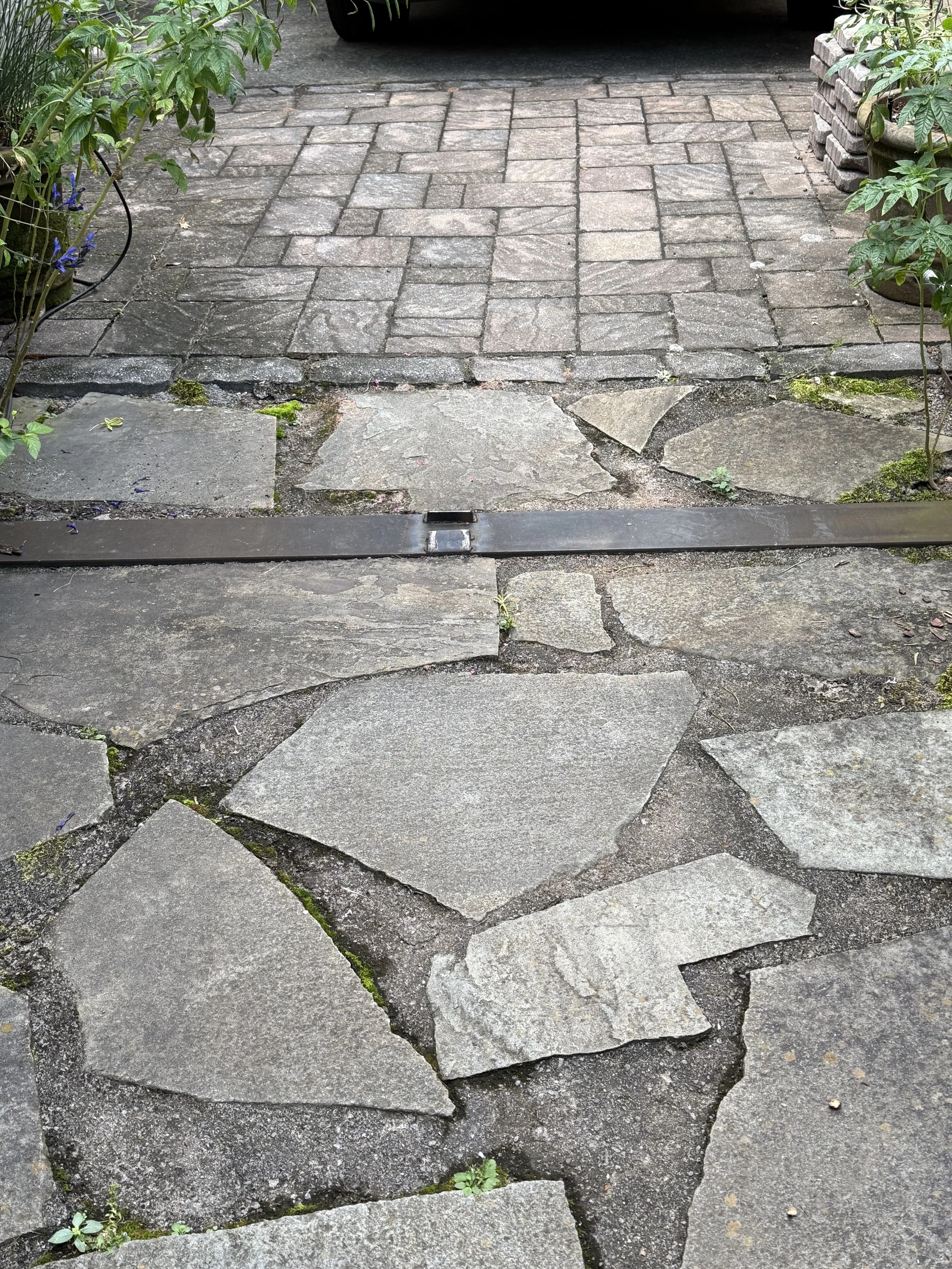
3 Paved Surfaces. The bluestone walk is laid on a pervious bed and grouted with a pervious polymer grout. The driveway extension above is made of locking cobbles laid edge to edge, grouted with sand and held in place by a hard edge. Beyond that is the concrete driveway.

Gravel path lined with brick. This gorgeous gravel path is in the Shandon neighborhood and can be seen from the street. It features packed gravel edged by brick.

A pervious cobbled walkway at a Columbia residence.
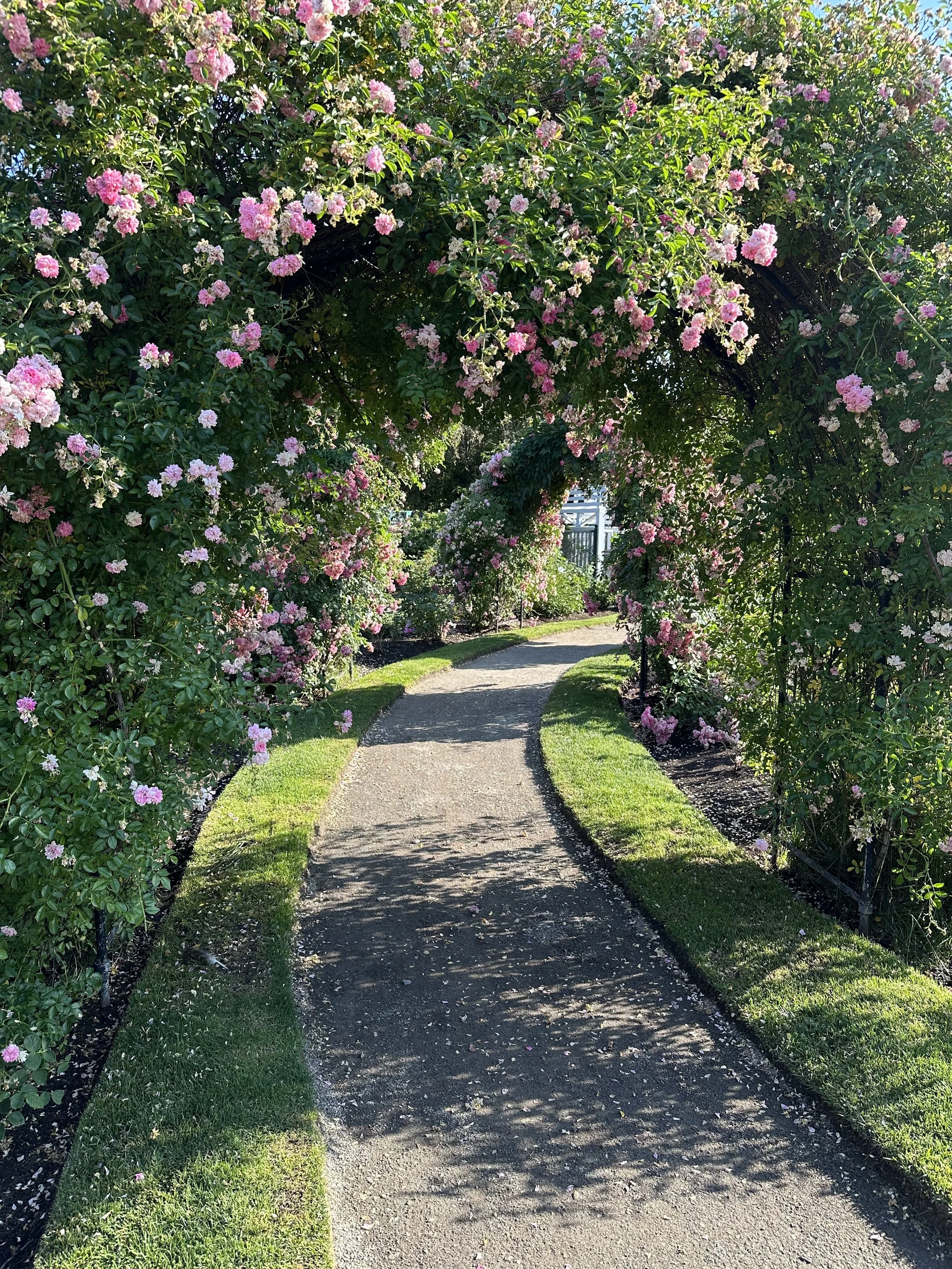
Another cinder walkway, this one in the Kelleher Rose Garden on the grounds of Back Bay Fens in Boston.
Use Slope to Your Advantage
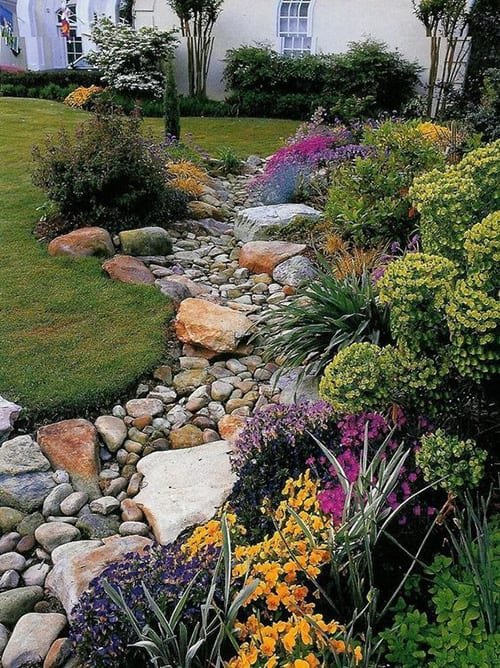
Creating a dry stream bed downhill of the house which sheds huge amounts of water from the roof ,shows an effective use of the existing slope.
Water follows whatever slope is available, so notice how the grade of your lot diverts water and whether any changes are needed. For example, a low spot near the foundation can hold water, and an extended downspout or water diverter can easily prevent water from collecting. Runoff beside a walkway can wash the ground away–a problem that can be addressed by installing a border or even a dry stream bed.
Locate the low spots where water collects, then look uphill and figure out where the water is coming from. Sometimes you can redirect water toward another part of the yard. In other cases, the grade may need to be adjusted or combined with another drainage measure.
Whatever you do, don’t create problems for your neighbors by diverting water into their yards! These photos show what happened in one backyard after a neighbor decided to cut down a row of cedar trees that were effectively managing stormwater runoff. Now this yard floods every time it rains.
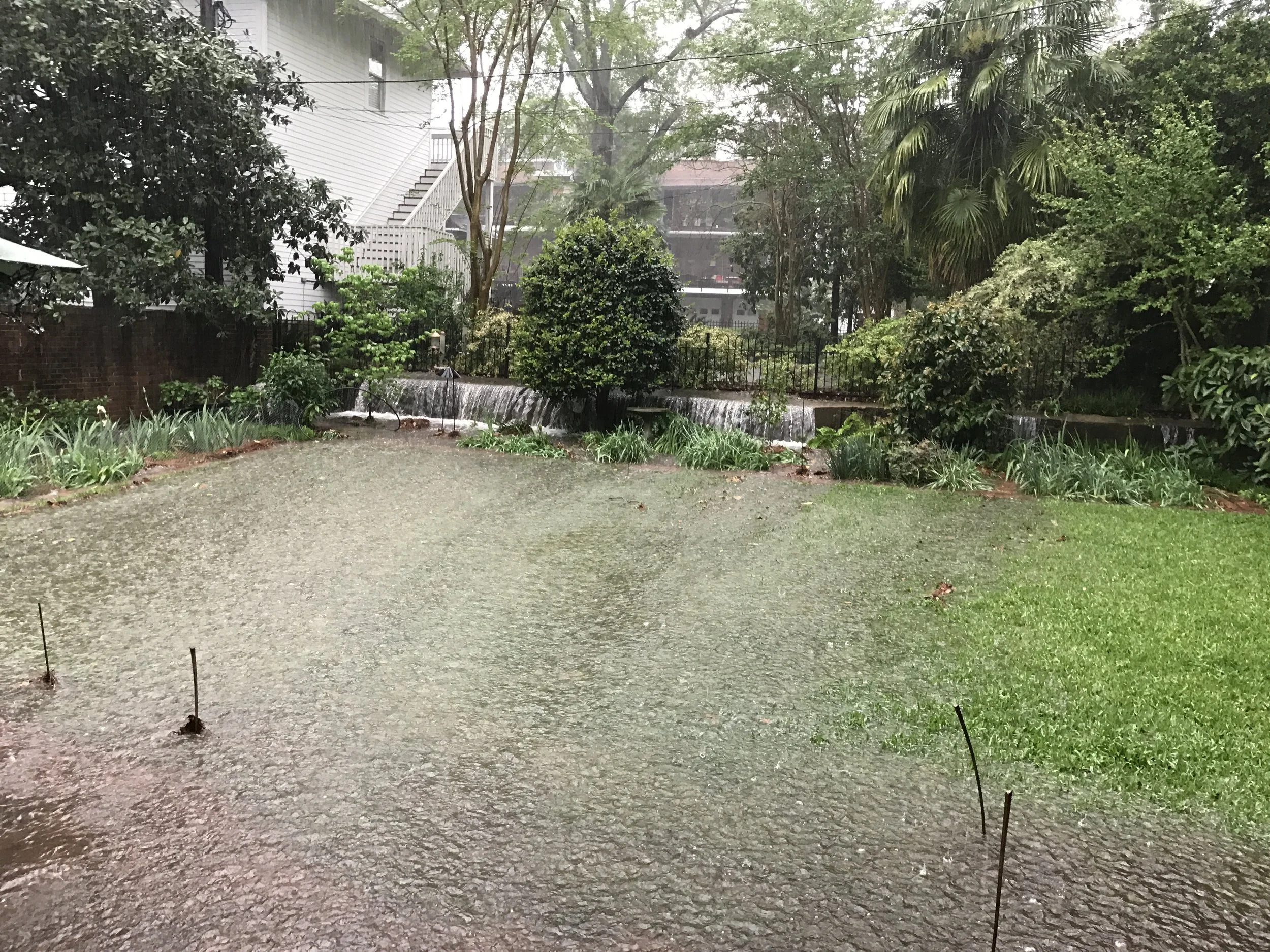
This problem started when the uphill neighbor cut a row of cedar trees.
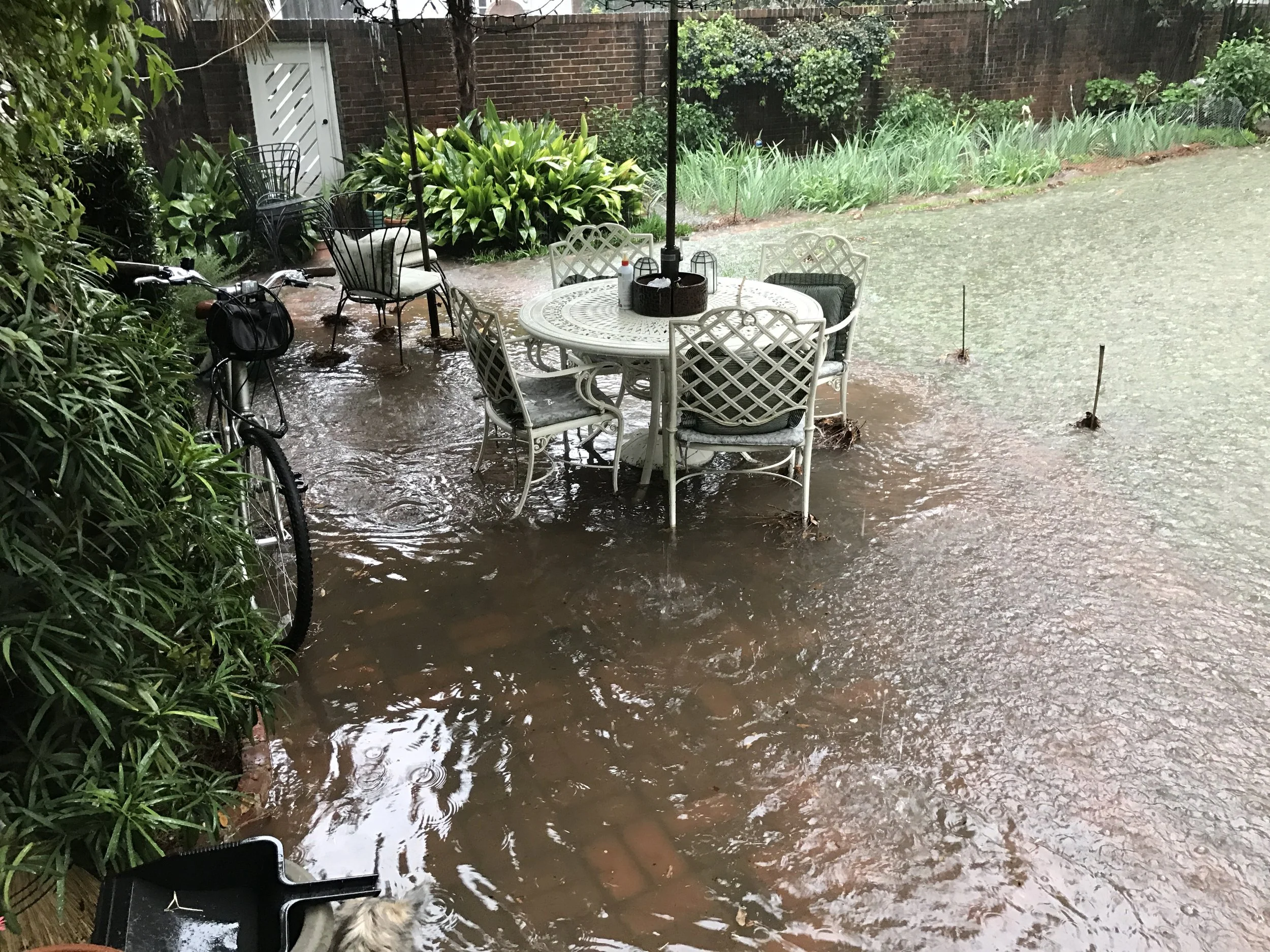
Be careful not to create problems for other!
So, while it is true that as property owners, we own the deeds to our properties and can decide what we will do (within the law, of course) we can’t treat our properties as islands. The decisions we make affect others, especially others downstream. We need to educate ourselves about the role of trees and plants in managing stormwater runoff.
A nice segue into our next section….
Using Plants and Trees to Manage Stormwater
Pay Attention to the Soil
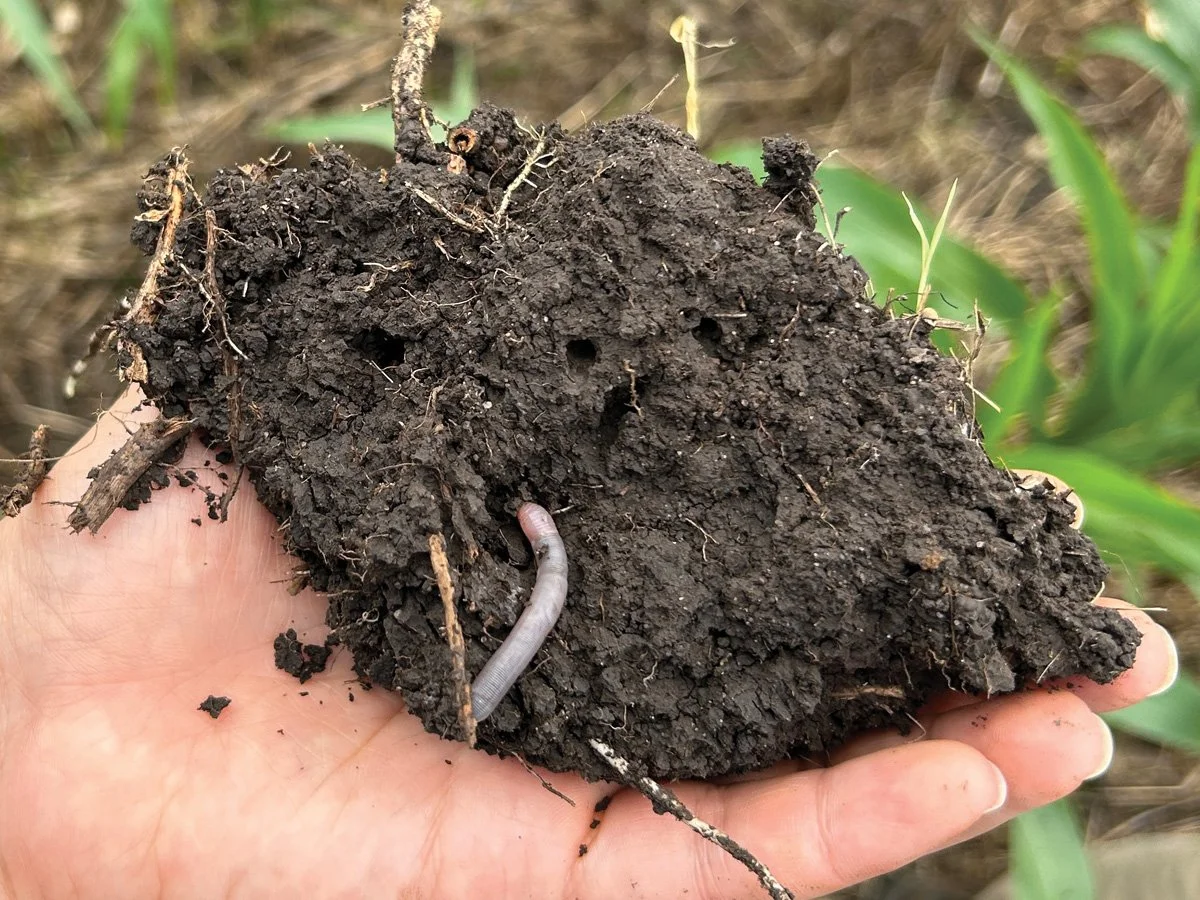
Photo Credit: Fine Gardening
Before we talk about planting, we need to talk about soil. Soil compaction is a major cause of runoff. If you lightly step on a garden bed after a rain and it feels hard instead of squishy, if water just sits on top or runs right off, it’s compacted. And planting in compacted soil is never a good idea.
To loosen compacted soil, use a pitchfork and work in compost. If the soil has a lot of clay and inert materials and lacks life, you might need to add topsoil or soil amendments, as well.

Randall & Carol Isherwood of Gardener’s Supply love talking dirt. They run an ecologically conscientious garden center that provides customers and the community with options to purchase sustainable, organic and local gardening products that decorate and enhance the quality of their living spaces. And they are big supporters of Columbia Green.
Realize, though, that topsoil, compost, mulch, and soil amendments serve different purposes, so before you spend a lot of money on amendments, get the advice of folks who know about soil-building. Grab a trowel and fill a bag with soil and send a sample to Clemson extension or take it to Randall and Carol at Gardener’s Outpost. Those folks enjoy talking dirt.
Plants and Trees
As we showed in the section above, plants and trees to help manage runoff if you put them in the right spots. A medium-sized shade tree can take up 1,000-3,000 gallons of water annually. Native grasses and plants also slow down rain hitting the ground and hold the soil in place, slowing water down as it flows downhill and allowing it to soak in gradually.
Even a narrow planting bed with plants and shrubs beside a driveway can slow water before it reaches a drain. You don't need every inch of your yard to absorb water. You just need to give rain a few spots to slow down and sink in.
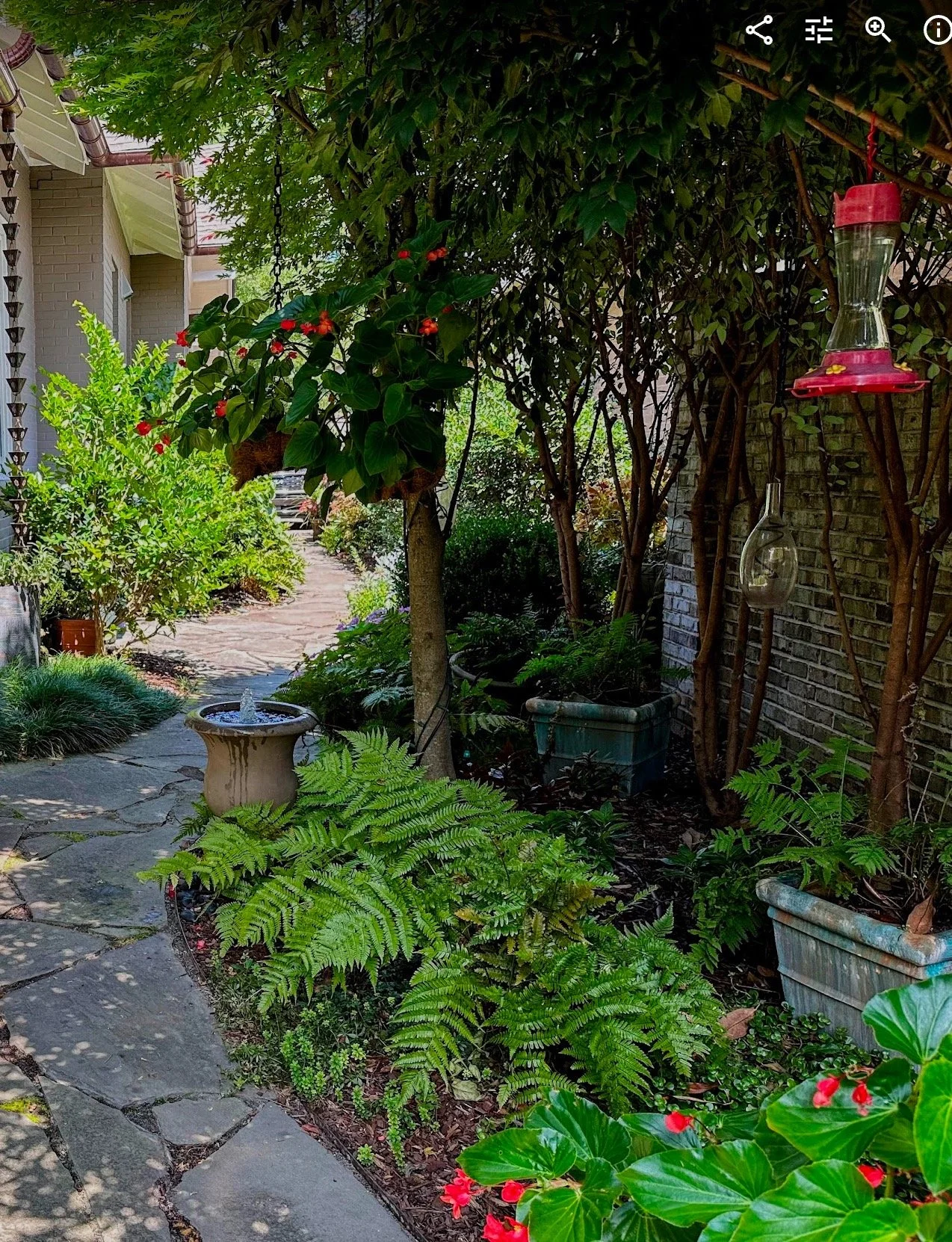
This little space represents a powerful force for water management A Japanese maple and tree-form shrubs slow down water entering the garden and provide take-up through the roots. Ferns and planters anchor the soil and take up rain water. The planting bed is mulched with partially decomposed tree bark mulch, and the path winding through it is laid on top of a pervious underlayment with a pervious polymer grout.
Use Mulch
Covering the soil in your beds with a good layer of mulch protects the soil from eroding and helps to absorb the force of heavy rain. When a heavy rain hits unprotected soil, it packs the top layer of soil particles together, causing water to start flowing over the surface of the bed before it has a chance to soak in, and carrying loose soil with it toward lower parts of your property.
Not only does mulch help to hold soil in place, it prevents rapid evaporation of soil moisture allowing your plants to benefit from rainwater longer. It also helps to cool and protect the roots of young plants as they grow.
Just keep the mulch where it belongs. Keep it pulled back a bit from the trunks of trees and the foundations of structures where it can allow decay and pests to enter your home and your trees and shrubs. If mulch tends to wash away during hard rainfalls, consider using a border to keep it in place.
Consider a Rain Garden
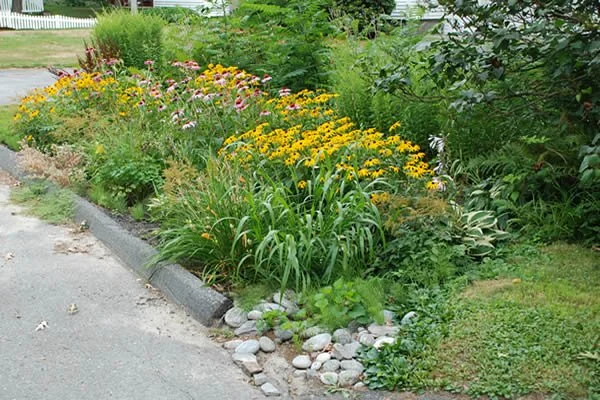
An example of.a residential rain garden from the EPA.
A rain garden is a shallow planted area designed to receive runoff and let that water collect for a short time before soaking into the ground. A well-planned rain garden can help manage runoff while adding a useful planting area. If you have a low spot where water tends to collect, a rain garden may be worth considering. Grasses, shrubs, and other plants suited to the site's wet and dry conditions should be chosen to complement your space.
To learn more about rain gardens, visit the Gills Creek Watershed Association website or visit your Richland County Master Gardeners.
A Few Small Changes
Rainwater management requires a customized approach for each site and its conditions. Get to know your land and how water moves through it. Take advantage of the expertise of landscape suppliers and garden experts to help you figure out what is best for you. Start small and focus on what you can do to keep your soil on your land and not in the storm drains.
Author Bio
Megan Lambert is with AHC Landscape Supply, a landscape materials supplier serving homeowners, landscapers, and contractors in Woodstock Georgia. She writes about practical approaches to soil preparation, drainage, mulch, and other landscape projects. Her website is https://ahclandscapesupply.com/
Jennifer Young is Columbia Green’s Interim Executive Director. She edited this piece and contextualized it for our locale. She also provided local photos and links to local resources.
