Bee City Buzz:
What’s Blooming for Early Emerging Pollinators?
By Brad O’Brien at BeeCity Columbia
With the arrival of spring and warmer weather, you’ve likely noticed bees and maybe even a few butterflies flying around looking for nectar. But where are they finding it? In late winter and early spring, plants are just starting to wake up as well, and in most yards and other landscapes heavily altered by humans, there’s not much blooming to provide nectar for emerging pollinators.
Of dandelions and other demons
Two commonly planted species that are blooming in late winter and early spring are daffodils and tulips. Unfortunately, you won’t see many bees or butterflies visiting them. These plants are not native to the United States, and are not significant sources of nectar for native pollinators. Where you will find bees is on plants that are often pulled, poisoned, and otherwise treated like a scourge to be eradicated--dandelions. Like tulips and daffodils, dandelions are not native to the United States. They can also spread quickly across large areas. However, they are often the only flowers providing nectar for early emerging pollinators.
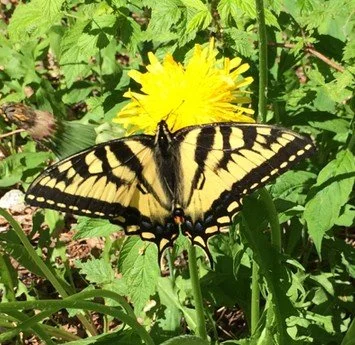
Eastern tiger swallowtail, South Carolina’s state butterfly, visiting a dandelion. This butterfly emerges in early spring when dandelions are
often one of the only sources of nectar available.
Photo credit: Emma Tutein, iNaturalist, CC BY-NC 4.0 license, original, photo cropped.
So I’m telling you to pull up daffodils and plant dandelions!? Of course not! But I hope you will change your perception of them. If daffodils and tulips are an early source of spring beauty in your yard, enjoy them! Just know they aren’t doing much for the beneficial insects flying around. Try also to reconsider dandelions. Even if you find them unattractive, remember that they might be the only sources of nectar for the bees that serve an essential role in plant reproduction.
Consider adding early blooming native plants.
It’s also important not to overstate the value of dandelions. What pollinators really need are native flowers that provide the specific nectar and pollen resources they have adapted to use. A yard full of dandelions provides nectar, but it’s still a degraded habitat, and it’s attractive to bees only because nothing else is available. Not unlike a bare cupboard containing only a package of Oreos. (For a more detailed discussion of this topic, see this article from the Xerces Society.)
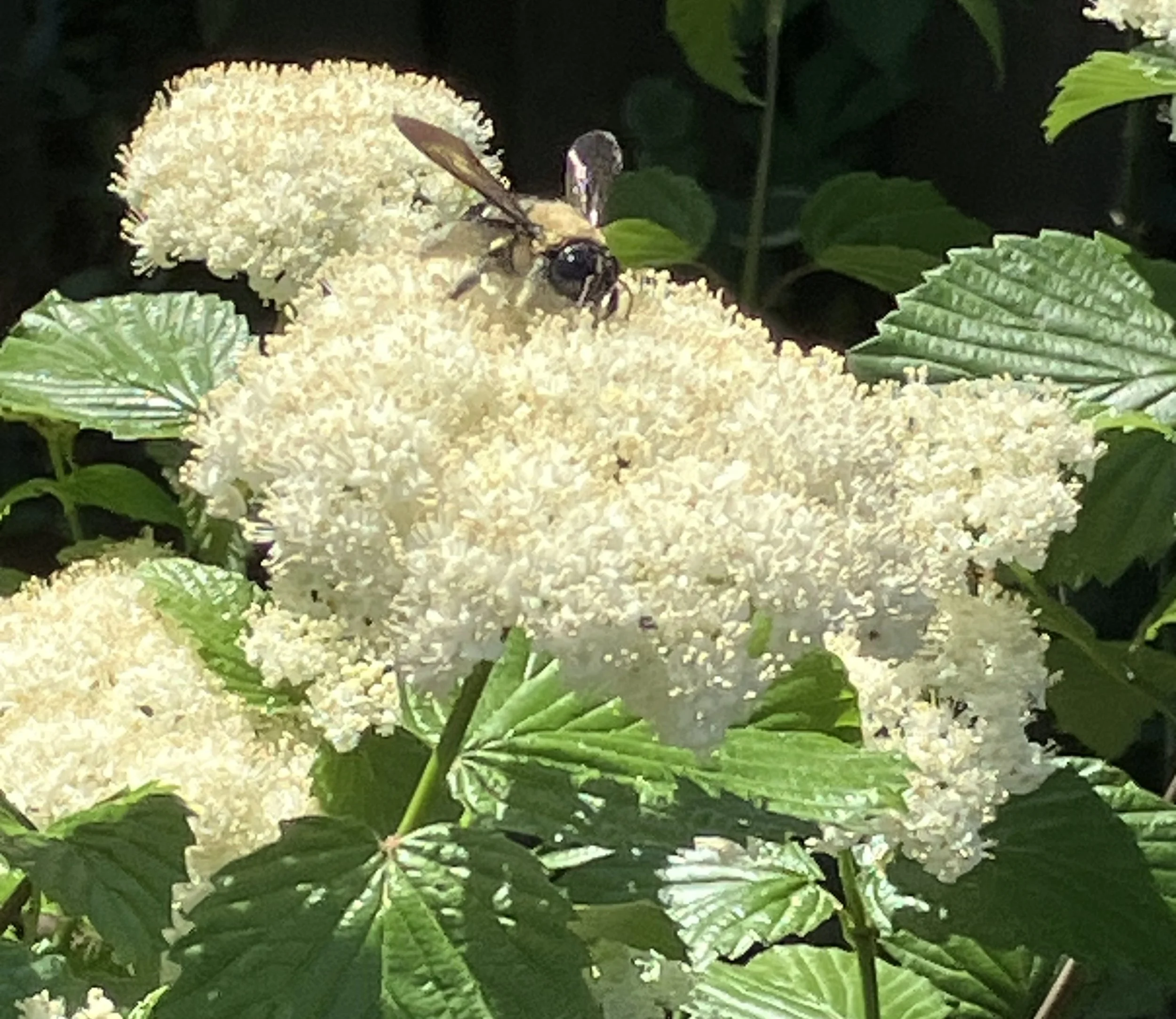
Bee nectaring on arrowwood viburnum (Viburnum dentatum). Viburnum is also a great plant for songbirds, which eat the berries that ripen in late summer. Photo credit: Brad O'‘Brien
Fortunately, there’s a wide variety of early blooming native plants to choose from, with options for small and large spaces, sunny and shady areas, and different aesthetic tastes.
Trees and Shrubs
If you have room, trees and shrubs are great options for pollinators. Many species bloom early, and they also feed a variety of caterpillars. American plum, Chickasaw plum, and black cherry trees produce profuse white blooms and feed caterpillars for over 300 species of butterflies and moths. Early blooming shrubs include viburnum and blueberries, both of which also feed many species of caterpillars.
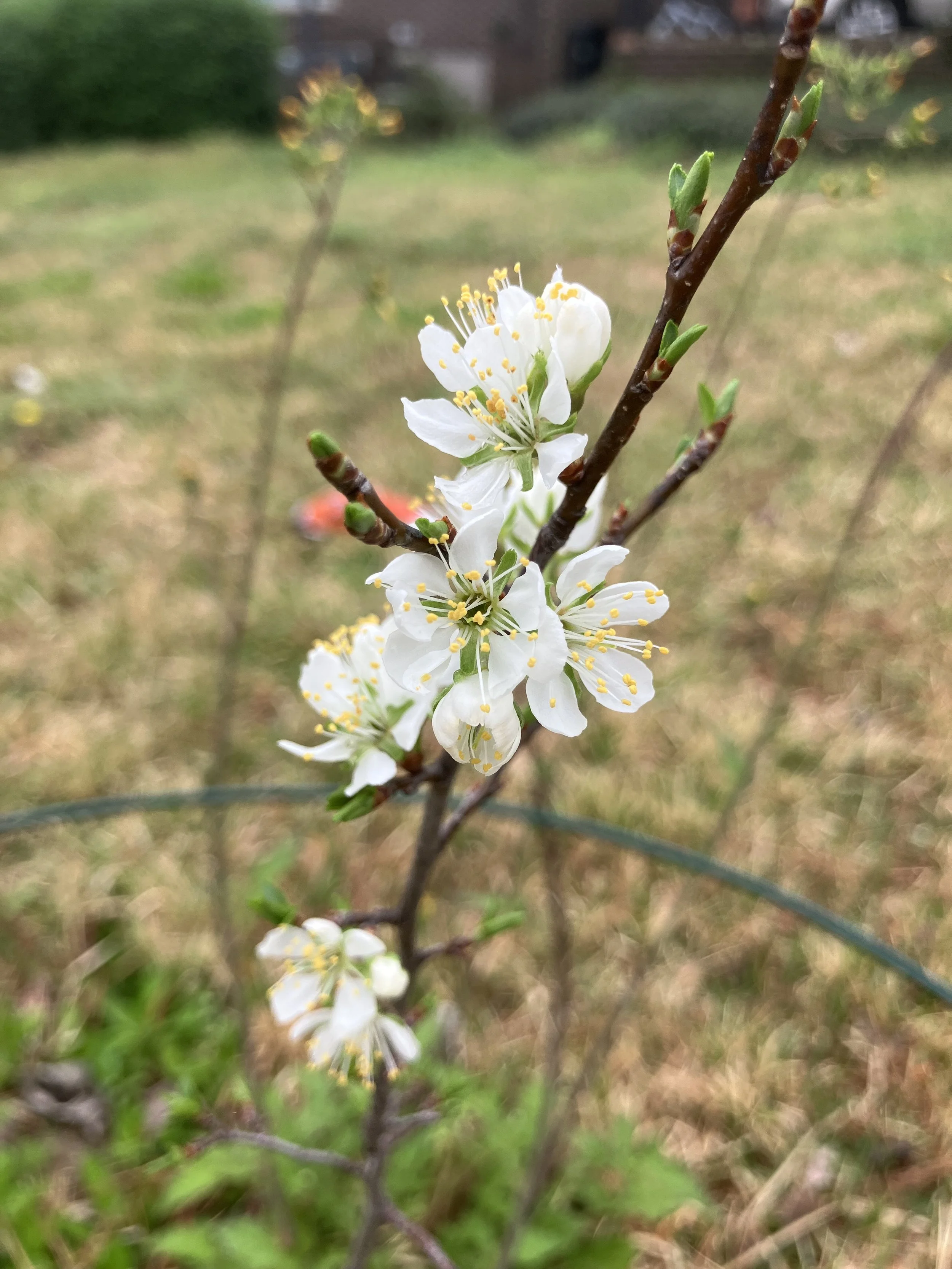
Blooms from an American plum tree. In addition to producing fruit loved by humans, plum trees are also important early sources of nectar for pollinators. Photo credit: Brad OBrien
Vines
If you have an area that can support vines, and you’re okay with them becoming a bit unwieldy, several early blooming varieties are available. (Note: Most of the vines that spread aggressively are non-native, like Kudzu and English ivy. Native vines have a role in the ecosystem and are kept in balance by the caterpillars that eat their leaves.)
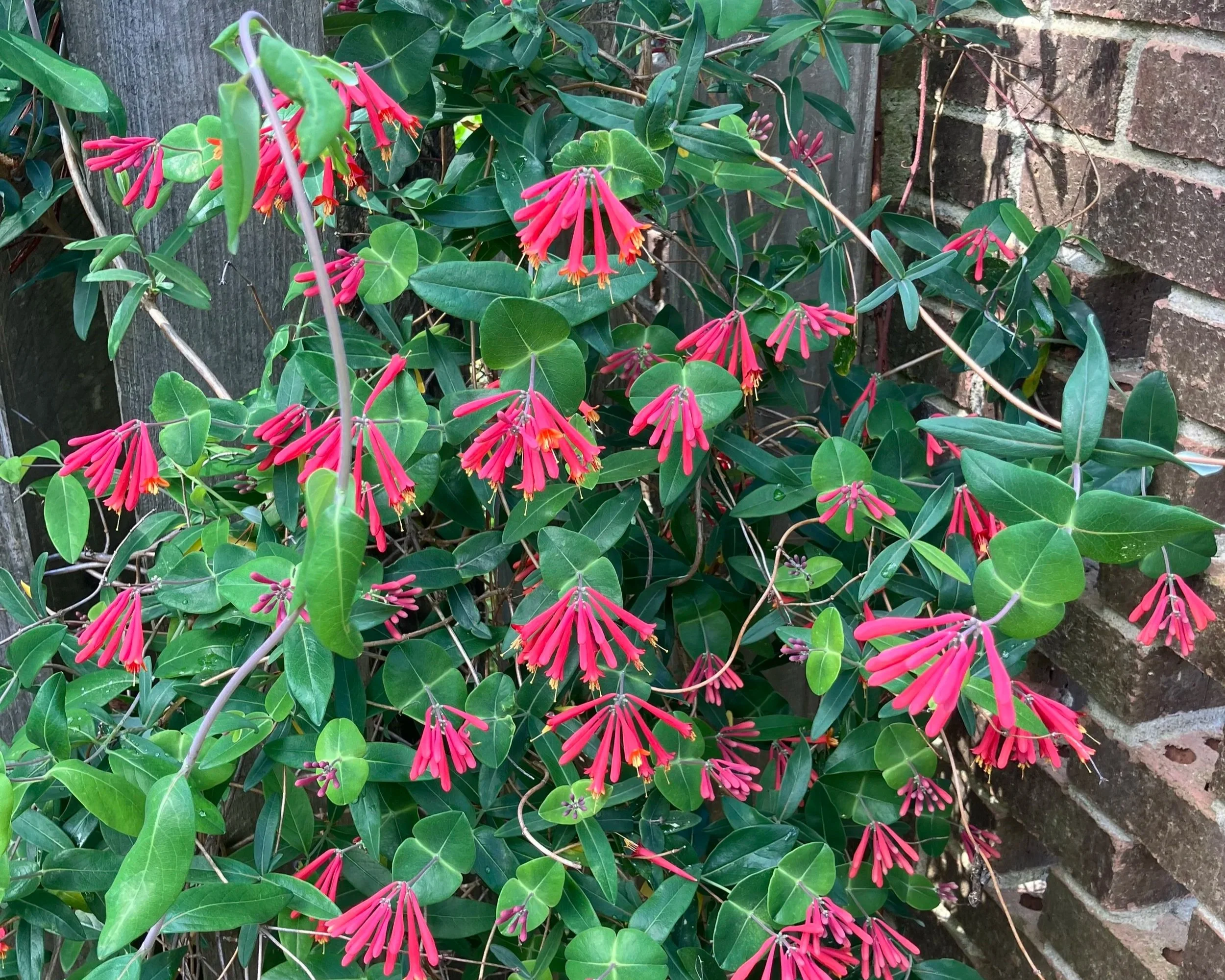
Native honeysuckle produces an
abundance of red blooms
starting in early March.
Photo credit: Brad OBrien
One of the best options is coral honeysuckle. It supports pollinators, functions as a natural bird feeder, and produces beautiful red blooms from early spring to late summer. The flowers start appearing in March. The leaves feed the caterpillars for the hummingbird clearwing moth, a welcome visitor that looks like a mix between a bumblebee and a hummingbird. If you’re lucky, you might even see a hummingbird and a hummingbird moth visiting the plant at the same time! After it blooms, native honeysuckle produces berries that feed songbirds.
Wildflowers
If you have shady areas where you struggle to get anything to grow, try adding wildflowers. Many early blooming natives prefer shade. Wild geraniums will liven up a bare area with their purple blooms; American columbine will add a touch of red; and Chrysogonum virginianum will add a blanket of green and gold. For sunny areas, try lanceleaf coreopsis and Golden Alexanders, which feed the caterpillars of the black swallowtail butterfly.
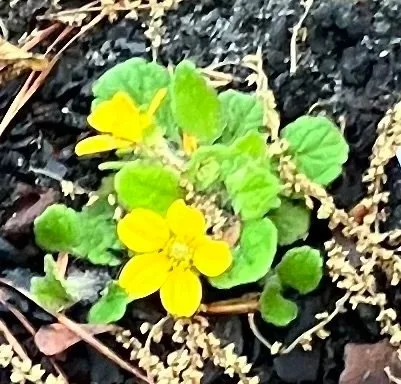
Commonly referred to as “green and gold,” Chrysogonum
virginianum will cover a bare, shady area with a natural carpet that
provides nectar to bees in the spring.
Photo credit: Brad OBrien
But where do I find these plants?
More and more nurseries and plant shops are starting to carry native plants, but it can still be challenging to find them, especially less popular species. Online vendors can be a good option, but where possible, buy from local suppliers. As a first step, try your favorite local nursery or plant shop. If a species in this post sounds interesting, and you don’t see it, ask for it. The more people ask, the more incentive local shops will have to carry native plants.
You can also reach out to the suppliers listed on Columbia’s Bee City website: Native Plant Supplier List. For additional guidance, contact the Midlands Chapter of the SC Native Plant Society and plan to attend their spring sale on April 11, where you’ll find most of the species named in this post and many more.
