
Bee City Buzz:
Bee the change you wish to see…
By Brad O’Brien for BeeCity Columbia
In case you haven’t heard the exciting news, Columbia is now a Bee City! This designation from the Xerces Society for Invertebrate Conservation is recognition of Columbia’s commitment to protect native bees and other pollinators, raise awareness of their importance, and build a community dedicated to pollinator conservation. If you’d like to help support these commitments, there are simple steps you can take in your own yard to provide resources for pollinators. Spring is only a month away, and this is the perfect time of year to start making plans for creating pollinator habitat.
To identify actions you can take, consider a few basic principles.
Pollinators have babies too.
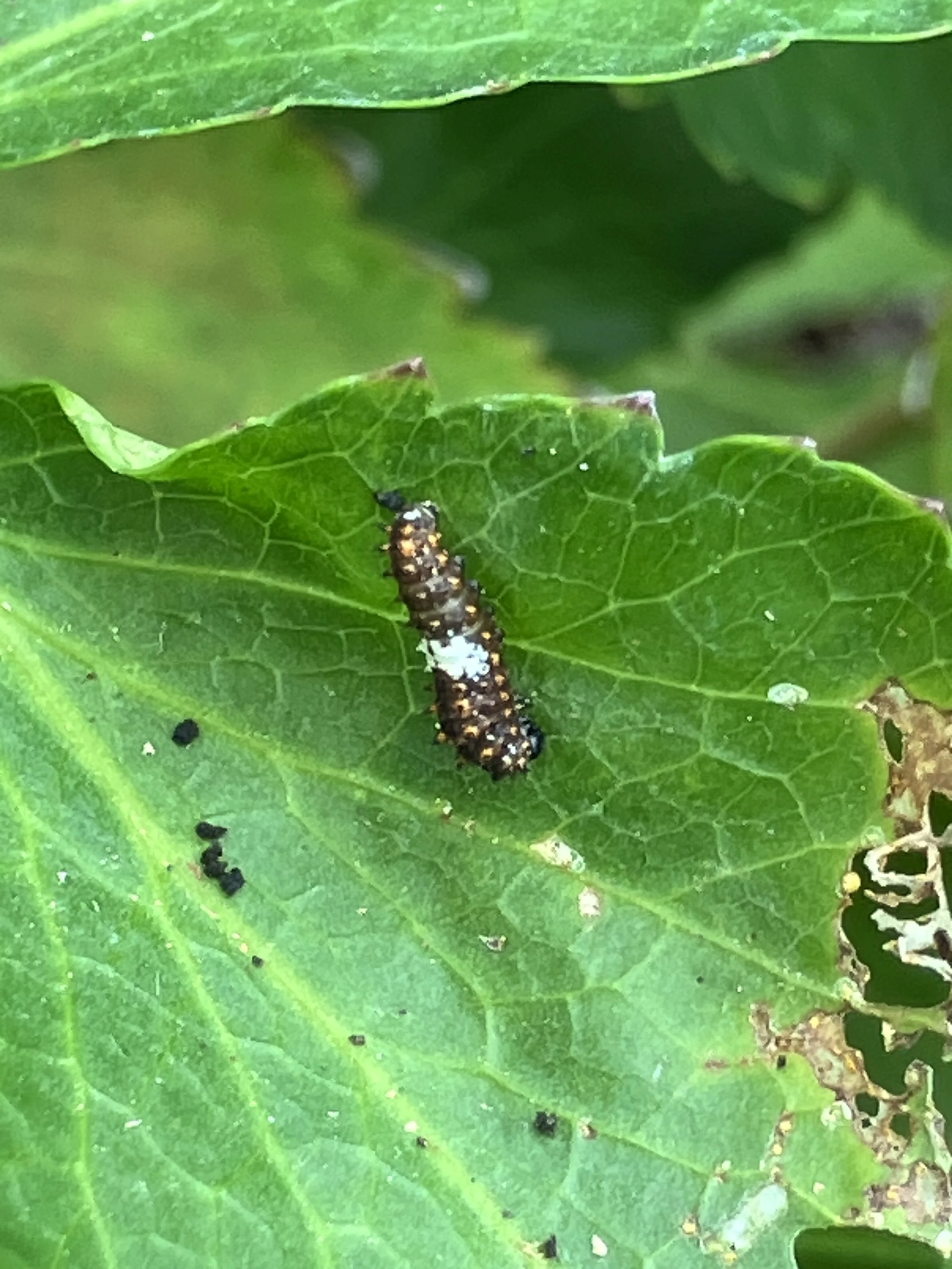
Black swallowtail caterpillar feeding on the leaf of a golden alexander.
Planting flowers is often the first step homeowners take to support pollinators, and it’s a very important step, as flowers provide nectar for adult bees, butterflies, and moths. But their babies, or larvae, have very different needs. Flowers do supply pollen for larval bees, but caterpillars, the larvae for butterflies and moths, eat leaves, not nectar, and they often require leaves from very specific plants. Larvae also need safe nesting sites where they can grow into adults. Like humans, pollinators have different requirements at different stages of their lifecycles, and it’s essential to consider these needs in planning habitat.
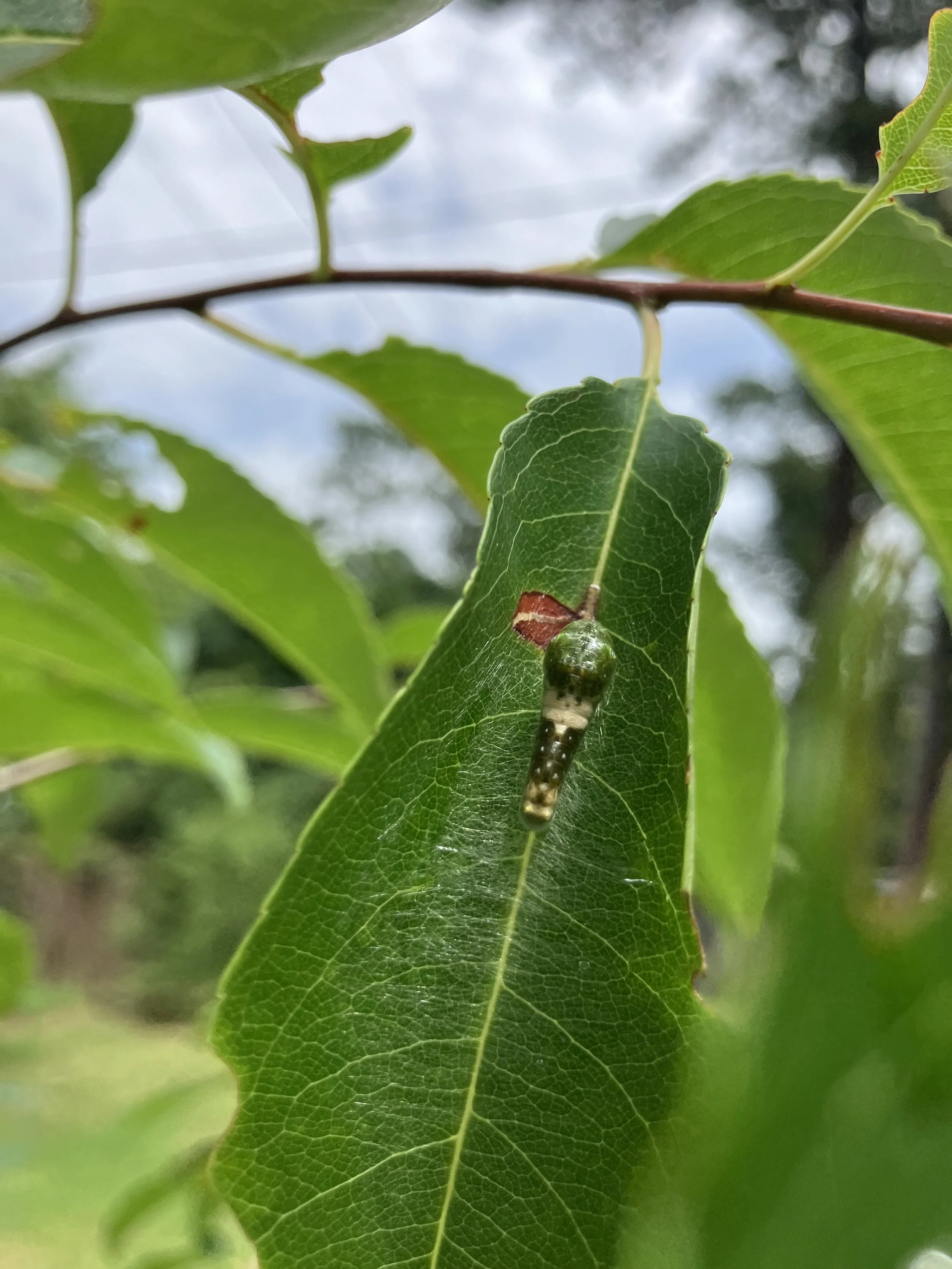
Eastern tiger swallowtail caterpillar feeding on the leaf of a black cherry tree.
A messy yard is a warm bed for pollinators
A bit of wildness in your yard ensures pollinators have safe places to nest and shelter from predators. Have you ever wondered where our native bees nest? 70% of them are ground nesting, and they will dig into bare spots in your yard to create underground nests. The rest are cavity nesters. Dead flower stems, rock piles, and bundles of sticks are all great nesting sites. For more information, see Nesting Resources.
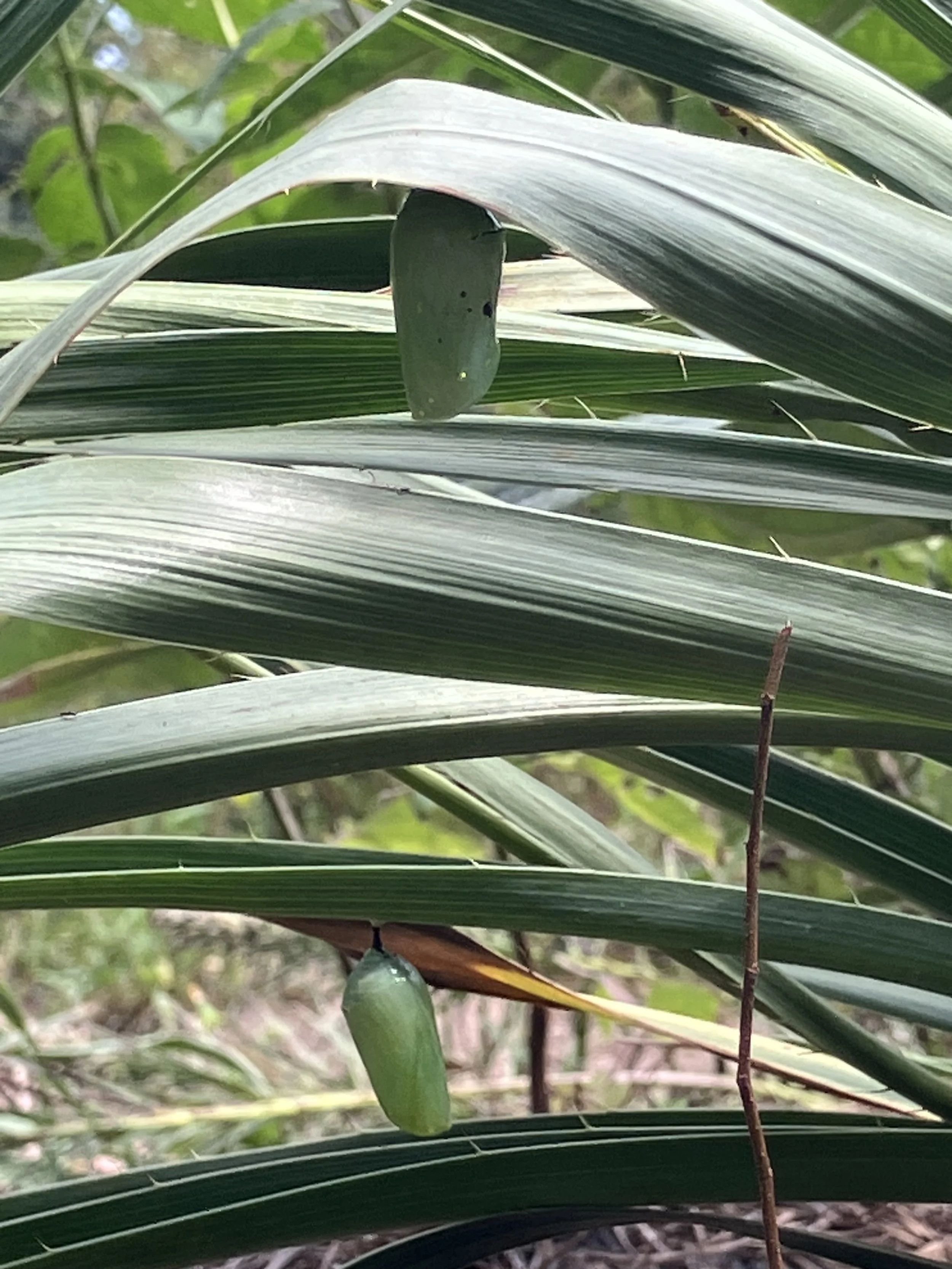
Monarch caterpillars need safe places to form a chrysalis where they can complete the process of changing into butterflies. These caterpillars have hidden themselves under rattlesnake master plants.
In the winter, bees and other insects need places to stay warm. Although leaves are typically raked, bagged, and dumped in a land fill, they are essential resources for insects trying to keep warm during cold weather. Leaves provide a layer of insulation and protection for bumblebee queens, pupating black swallowtail butterflies, wooly bear caterpillars, and a wide variety of other insects. They are important for adults and larvae.
If the rake calls too loudly or HOA rules or other ordinances require leaf removal, try leaving at least some of the leaves in place. The more leaf cover the better, but you can provide winter habitat for pollinators while also adhering to commonly accepted yard aesthetics. Even a small patch of leaves in a hidden corner of your yard can help. See the following article for a more detailed discussion on winter habitat: Leaves the Leaves: Winter Habitat Protection.
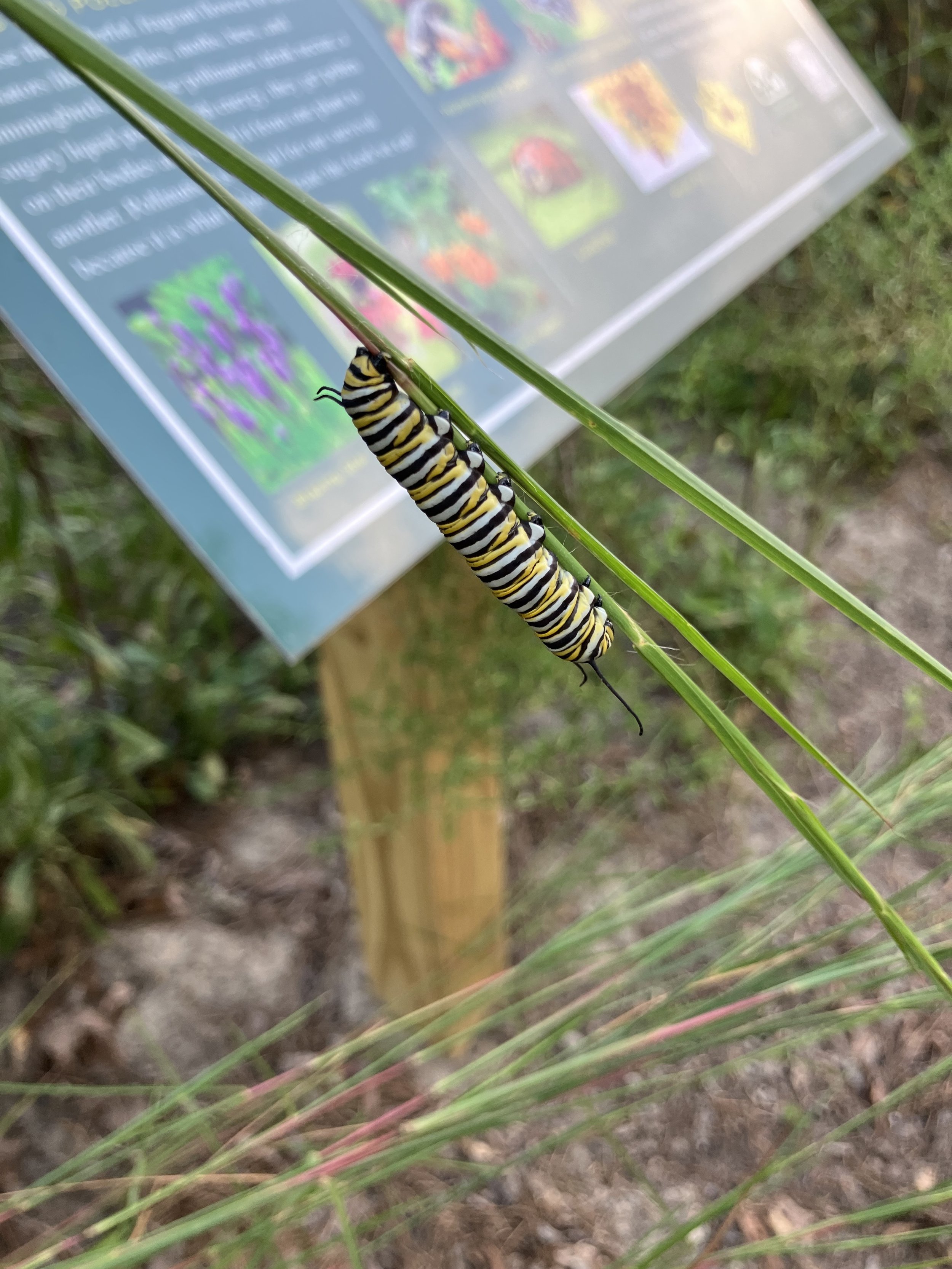
Monarch caterpillar crawling to a safe spot where it can form a chrysalis and start the process of transforming into a butterfly.
If you left the leaves in place this year and plan to clean them up for spring, try to hold off until the weather is consistently warm. If you’re a vegetable gardener and it’s still too cold to plant tomatoes, it’s also too cold for pollinators to leave their winter beds. Another guideline is if your grass is tall enough to mow, it’s probably safe to clean up the leaves. For more guidance, see For Pollinator’s Sake, Don’t Spring Into Garden Cleanup Too Soon
Native plants are best
Our native pollinators have co-evolved with our native plants, and they have developed specialized relationships. Native plants are always the best option to support native pollinators because they provide the specific nectar and pollen resources pollinators need.
Winter is a great time to plant trees and shrubs in South Carolina. It’s also a good time to plan a spring garden. When selecting plants, include flowers that bloom at different times of year to ensure nectar is available from early spring through late fall. Don’t forget the babies!
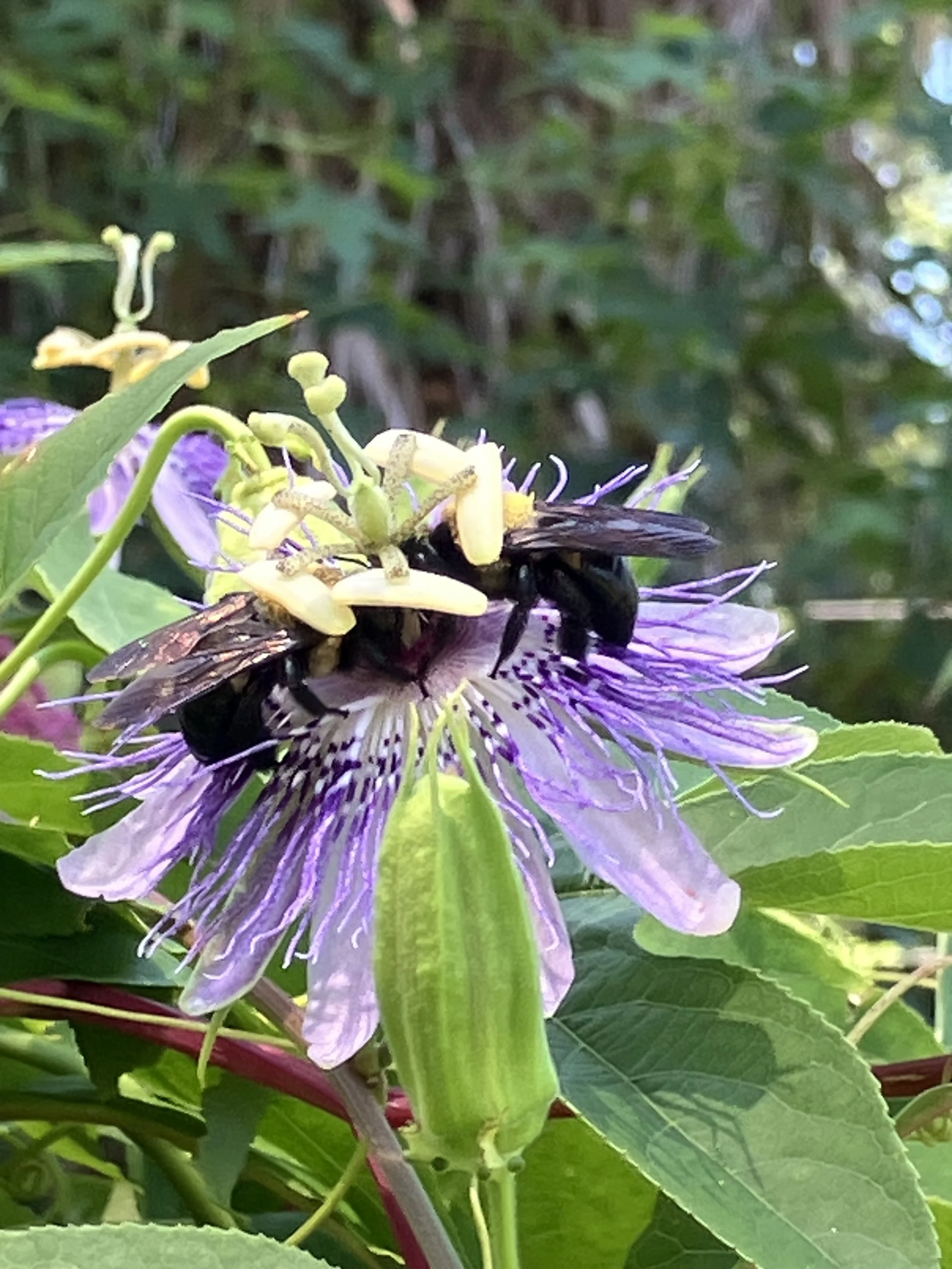
Carpenter bees visiting passionflower. Although passion vine might look like an exotic plant native to tropical locations, it is native to South Carolina and important food source for the caterpillars of fritillary butterflies.
For spring blooms, if you have space for shrubs, consider viburnum, which will also provide berries for birds and feed caterpillars. For yards with space for trees, Chickasaw plums and American plums will not only produce spring nectar and summer fruit, but their leaves will feed over 300 species of caterpillars. (Columbia Green’s upcoming Beat the Heat event is great opportunity to learn more about native trees!) Good wildflower options are wild geraniums in shady areas and lance leaf coreopsis in full sun.
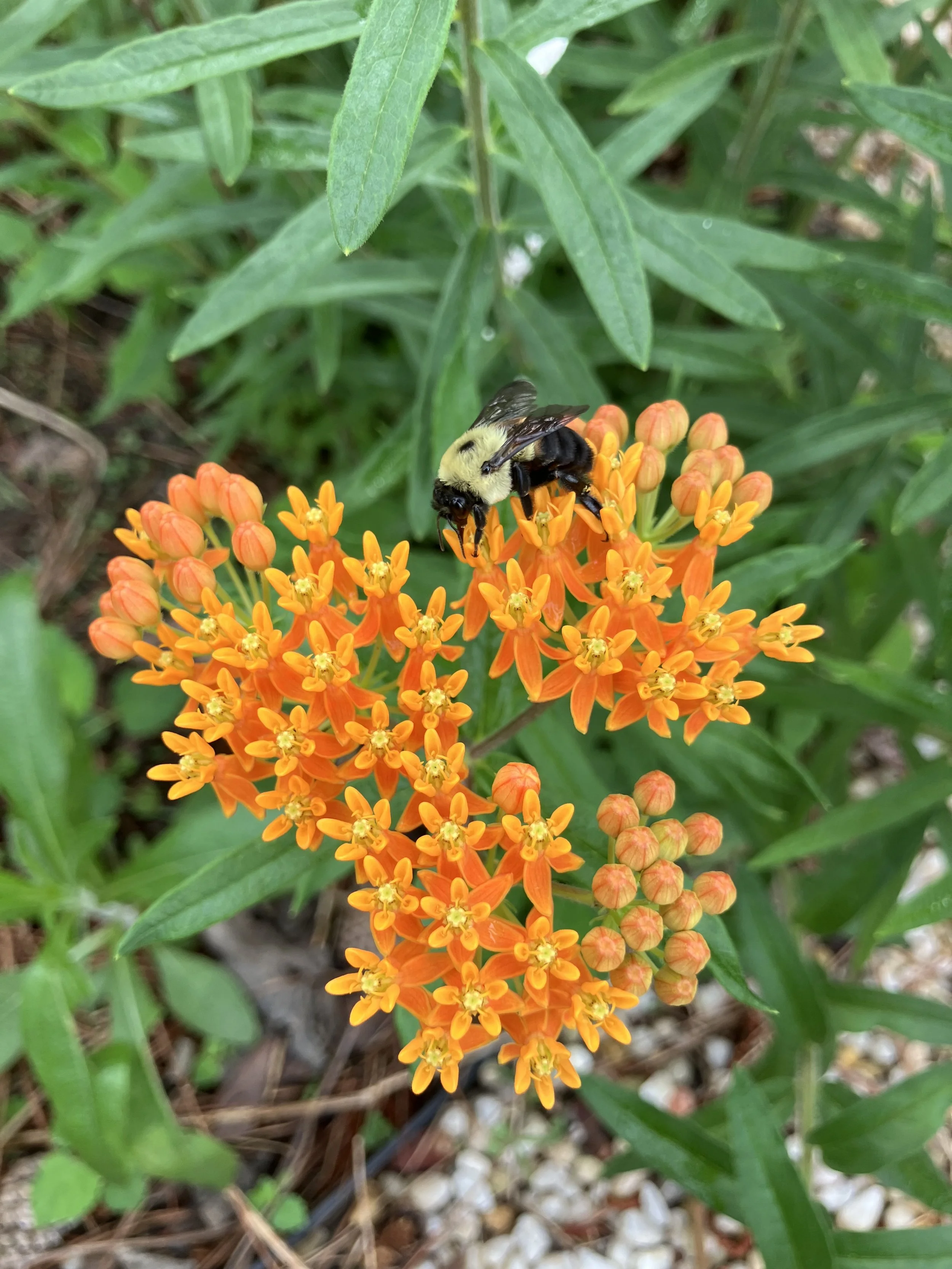
Add native milkweed in a sunny location, and you’ll have blooms throughout the summer for adult bees, butterflies, and hummingbirds. You’ll also feed monarch caterpillars. Recommended species native to our area are butterfly milkweed and swamp milkweed.
For late summer and fall blooms, add asters and goldenrod, both of which are excellent nectar sources. Goldenrod is also an important caterpillar host. A comprehensive list of recommended plants for the southeast is available here: Native Plants for Pollinators.
If this all seems like a lot of work, start small. Any of these actions will help add habitat for native bees. You’ll bring new life to your yard, and you’ll help expand Columbia’s growing community dedicated to protecting pollinators.