
Ask an Arborist
Right Tree, Right Place
Urban trees have a lot to contend with! From overhead lines to underground utilities, buildings, pavement—planting an urban tree to last for generations requires a bit of planning!
The "Right Tree, Right Place" Principle
Right Tree, Right Place is a principle used by arborists to help you match a tree's mature size, shape, and biological needs with its physical environment so it lives a long life—without requiring heavy pruning to avoid utilities, buildings, or paved surfaces.
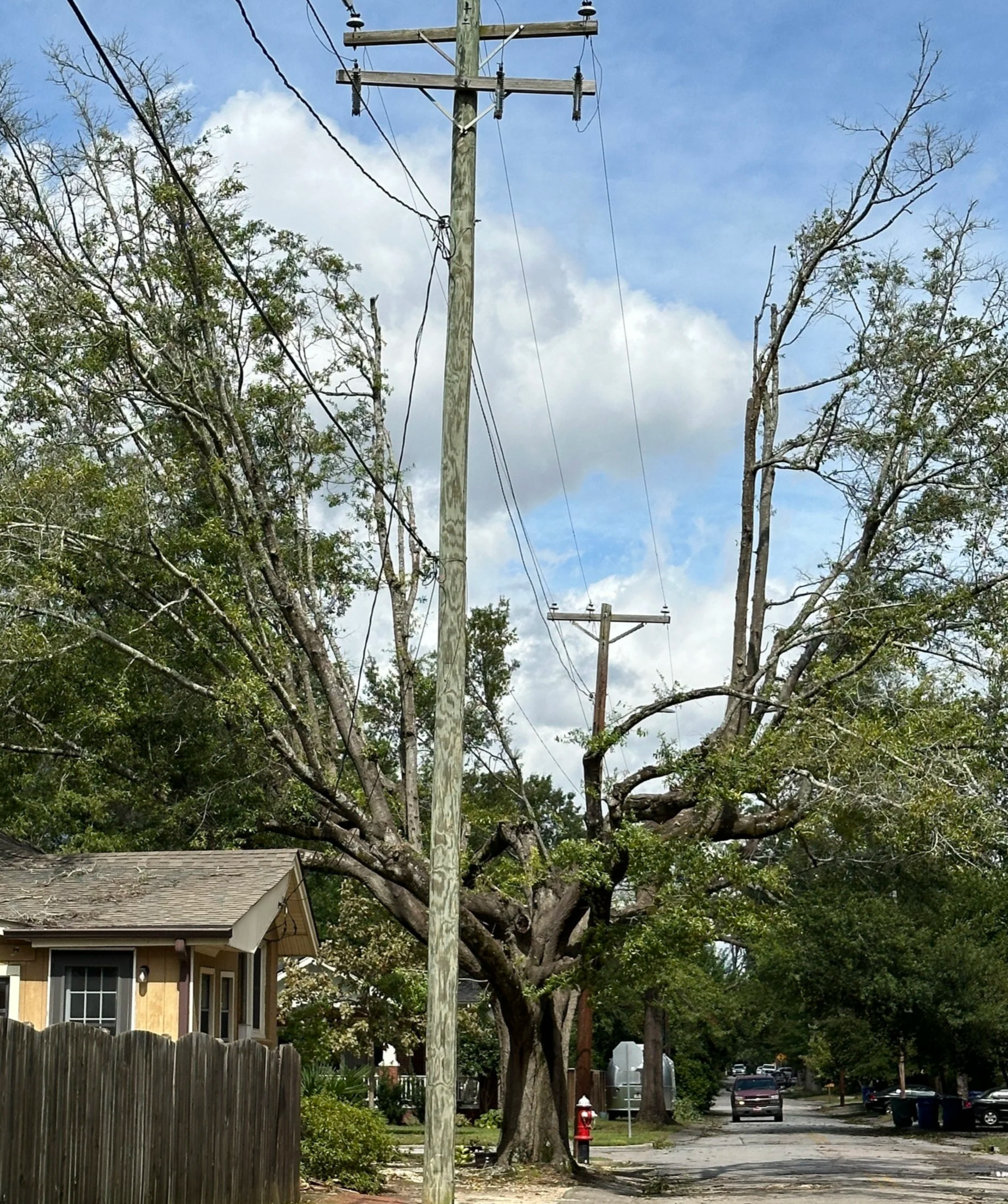
Planting trees without considering these factors often leads to a series of unfortunate events, as evidenced in this photo where an oak tree was planted under a power line. (Oops.).
Utility Clearances
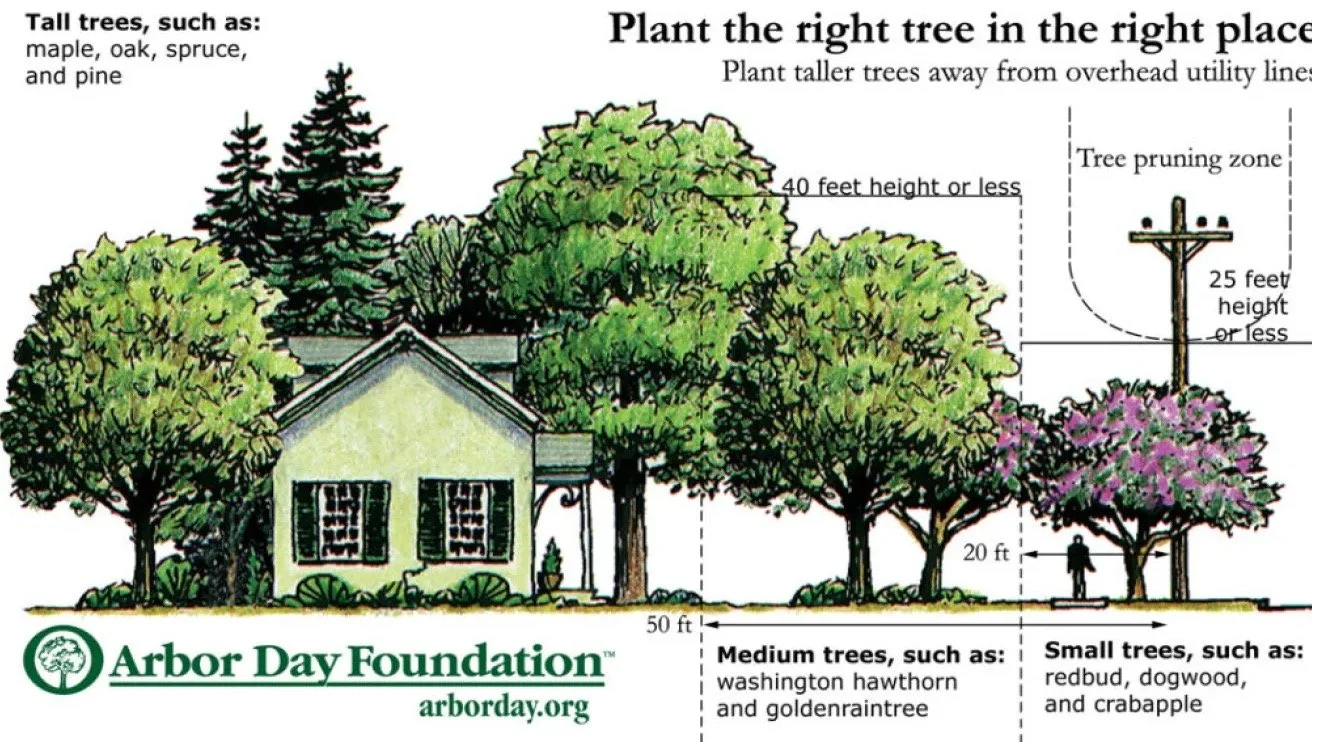
Overhead Power lines: Power companies are required by law to keep trees trimmed away from powerlines, so always check mature planting sizes before you plant.
Don’t plant anything that will grow taller than 15’ under a powerline.
Medium-sized trees (up to 50’ at maturity) should be planted 30’ back from power lines.
Large trees (taller than 50’ at maturity) should be planted 50’ away.
Always think about mature size when siting a tree.
Underground utilities: Plant trees and shrubs at least 10’ away from transformer boxes and underground utilities. Call 811 before digging to map gas, electric, and water lines. Keep trees clear of septic tanks, drain fields, and underground pipes.
Root & Canopy Space in Your Yard
Structures and buildings: Keep small trees 8 to 10 feet away from walls and 6 to 8 feet from corners. Medium trees need about 15 feet from walls, and large trees need at least 20 feet from walls to prevent branches from scraping roofs or siding.
Hardscapes: Plant trees far enough from driveways, sidewalks, and foundations to prevent future lifting or cracking.
Small Trees (Under 20–25 feet at maturity): Plant at least 3 to 8 feet away from the concrete edge (e.g., Japanese maple, flowering dogwood, crape myrtle).
Medium Trees (25 to 40–50 feet at maturity): Plant at least 12 to 15 feet away from the concrete edge (e.g., redbud, smaller birch varieties). [1, 2, 3]
Large Trees (Over 40–50+ feet at maturity): Plant at least 20 to 30 feet away from the concrete edge (e.g., oaks, maples, sycamores)
Shade
Plant deciduous trees on the south and west sides of a house for summer shade and winter solar gain. To determine where a tree will throw shade, go outside at various times of the day and stand where you are considering planting. Note the direction of your shadow and understand that your tree will be many times taller than you.
Click the image to view; use the button to download a copy to your computer.
Ask an Arborist
FAQs about Planting Trees
-
After planting, your tree is likely to “settle,” and you don’t want it to sink below the soil level where water could puddle. It is important to protect the base of the tree from staying wet which can invite pests, and decay, causing damage to the bark and cambium layer of the tree. Damage to your tree’s base can can cause your tree to slowly decline and die over time. Pay close attention to the base of your tree.
-
Trees grown in containers have lived in a contained environment. When their roots hit the sides of the pot, they can start growing in circles around the edge of the pot. When you plant, it is important to loosen those roots and as possible, spread them out and point them outwards so they don’t continue to grow in a circle and strangle the tree.
-
NONE. Backfill using only the soil you removed from the hole. Why? Because you want the roots of your tree to push out past the hole you dug into the surrounding soil. Creating a “cushy” environment inside the hole will have the same effect as a container. When the roots hit the side of the hole, they are likely to start growing in circles around the “container” you created by filling the hole with softer materials.
-
The TreeDiaper works like a baby’s diaper. It is filled with the same material, designed to soak up LOTS of water. Unlike a baby’s diaper, though, it leaks that water back into the soil gradually. When you water, it soaks up some of the water. When it rains, same thing. Basically, it helps you moderate fluctuations in soil moisture. It is NOT a replacement for watering. Soak your tree diaper in a bucket for 15-20 minutes before installing it, and position it so it isn’t touching the trunk of the tree. When you water your tree, water the diaper too.