
Ask an Arborist
How to Mulch Trees
Learn how to properly mulch your new tree and the trees around your property. Find answers to frequently asked questions about mulching, and build your understandings about why mulch matters.
Proper mulching is absolutely critical to tree health. Improper mulching can lead to degradation of the bark that is responsible for protecting everything within the tree.
Mulching 101
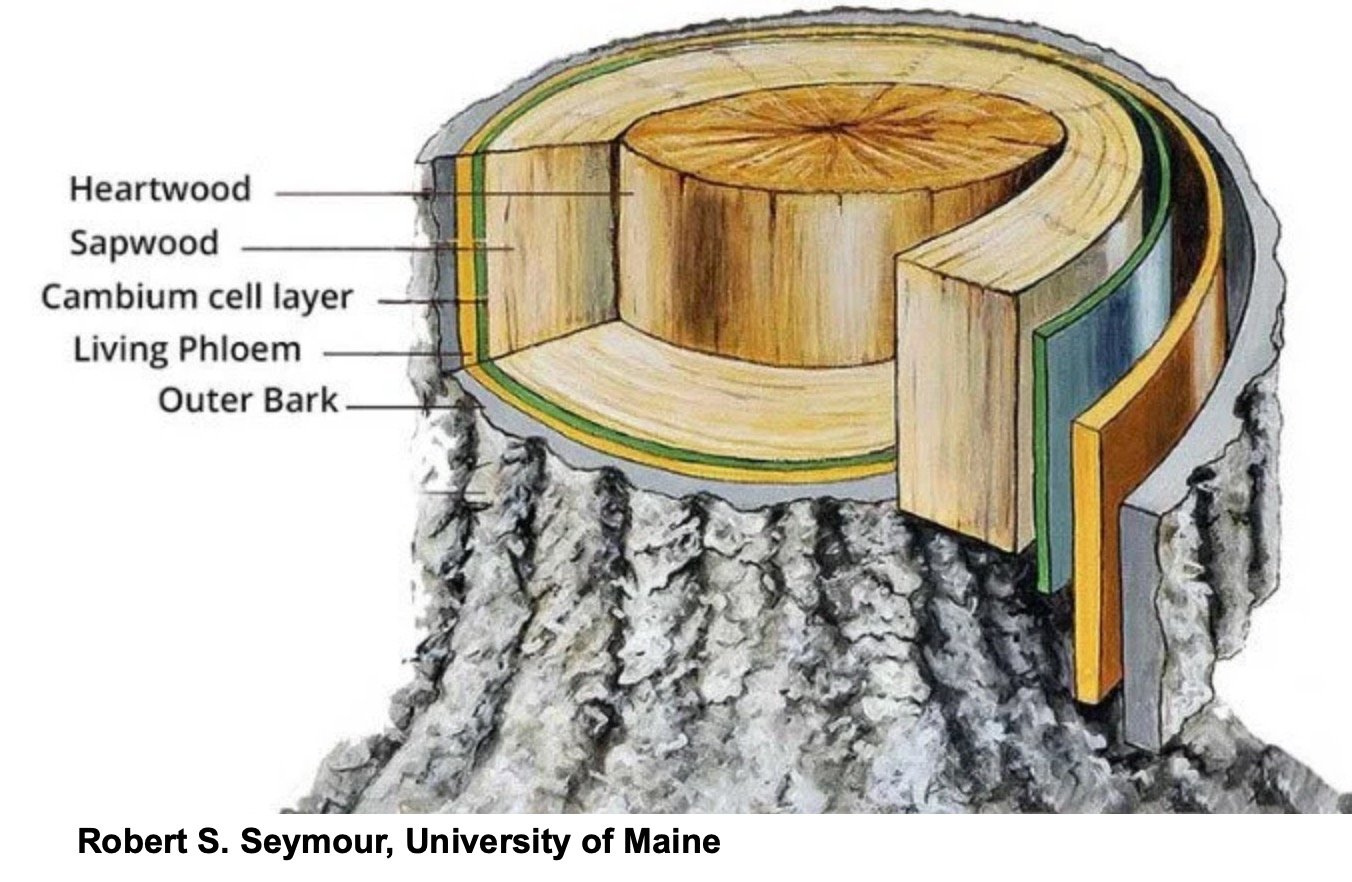
The most important parts to a tree's functioning are right under the bark—the living phloem and cambium cell layers. The cambium layer produces new cells for the growth of the tree, while the phloem layer conducts food, water and nutrients. Protecting these inner layers is vital. If they are destroyed in a ring around the trunk (a process called girdling), the growth tree's engine and circulatory system are damaged, which can eventually kill the tree.
Physical damage to the cambium layer can happen as a result of hitting the trunk with string trimmers …or improper mulching.
Mulching Mistakes
The most common mistake people make when mulching is creating "mulch volcanoes." This happens when mulch is piled against the base of the tree trunk, burying the root flare (the area where the trunk widens at the soil line).
Piling mulch against the tree trunk damages the tree from the outside in, due to a sequence of biological events:
Mulch traps moisture. The bark layer must be exposed to air and remain dry to protect the inner layers of the trunk. When mulch is piled against the trunk, it causes the bark to remain moist.
Bark moisture creates the conditions for decay. Prolonged moisture allows pathogens like fungi, bacteria and yeasts to move in and damage the tree. Boring insects are also provided a refuge.
Damage to the protective outer bark allows access to the inner layers. Once the protective outer bark is damaged, pathogens, fungi, and boring insects gain direct access to feed on and destroy the vulnerable living phloem and cambium layers underneath. Slowly, the tree begins to decline, often from the top down. If the tree is effectively girdled, the rate of decline and death can be rapid.
Mulch Right!
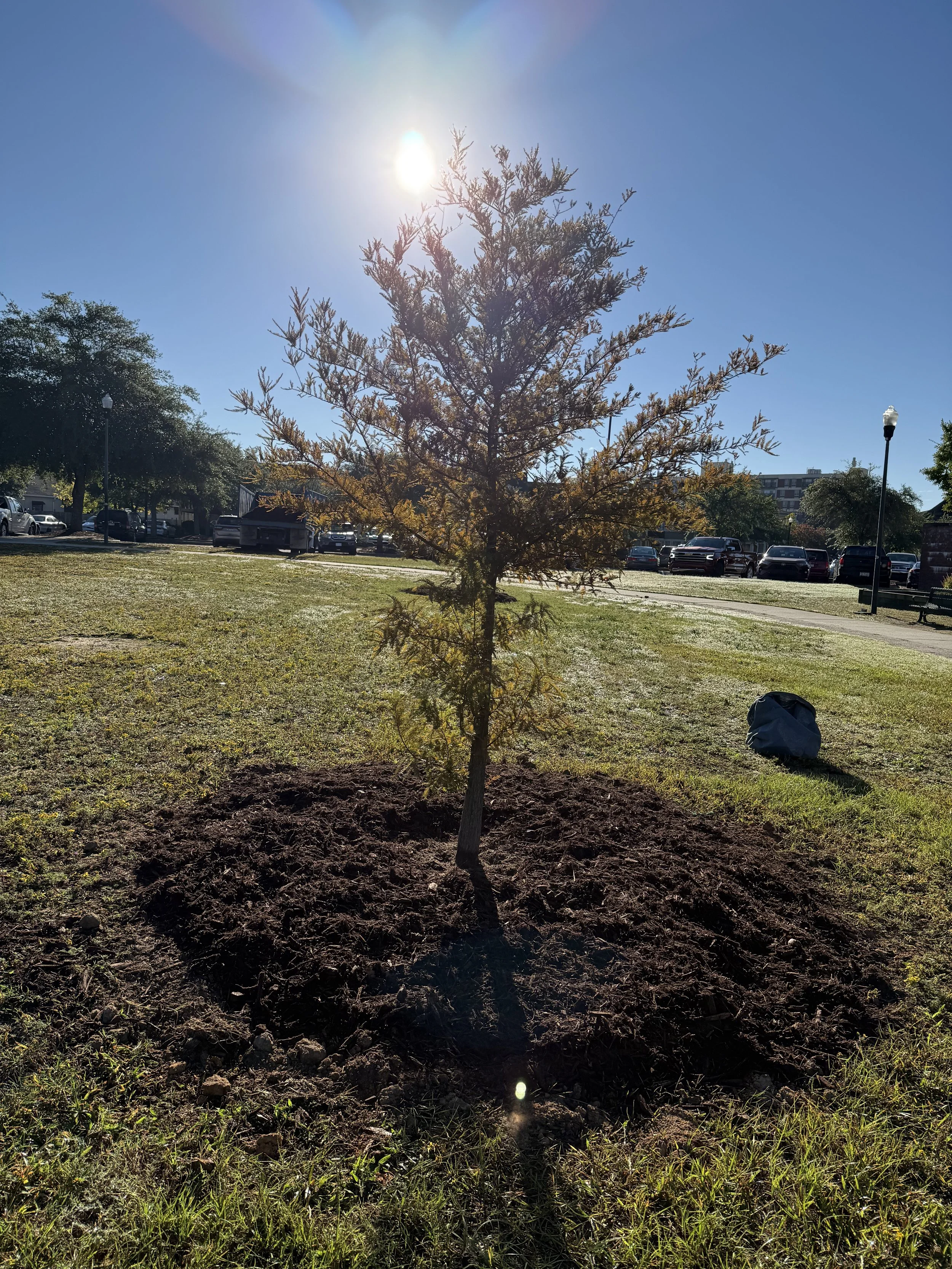
Correct mulching follows a few simple rules, and starts with correctly planting your tree..
Remember to plant a little above the soil line. Be sure to plant the tree an inch or two above the soil line so the flare of the tree is exposed. This will ensure that as the soil settles in the hole, the tree doesn’t settle below the soil line.
Use organic mulch. In a forest environment, trees are naturally mulched by falling leaves and branches that decompose and add nutrients to the soil around the tree. Mulching with organic materials provides similar benefits in an urban environment.
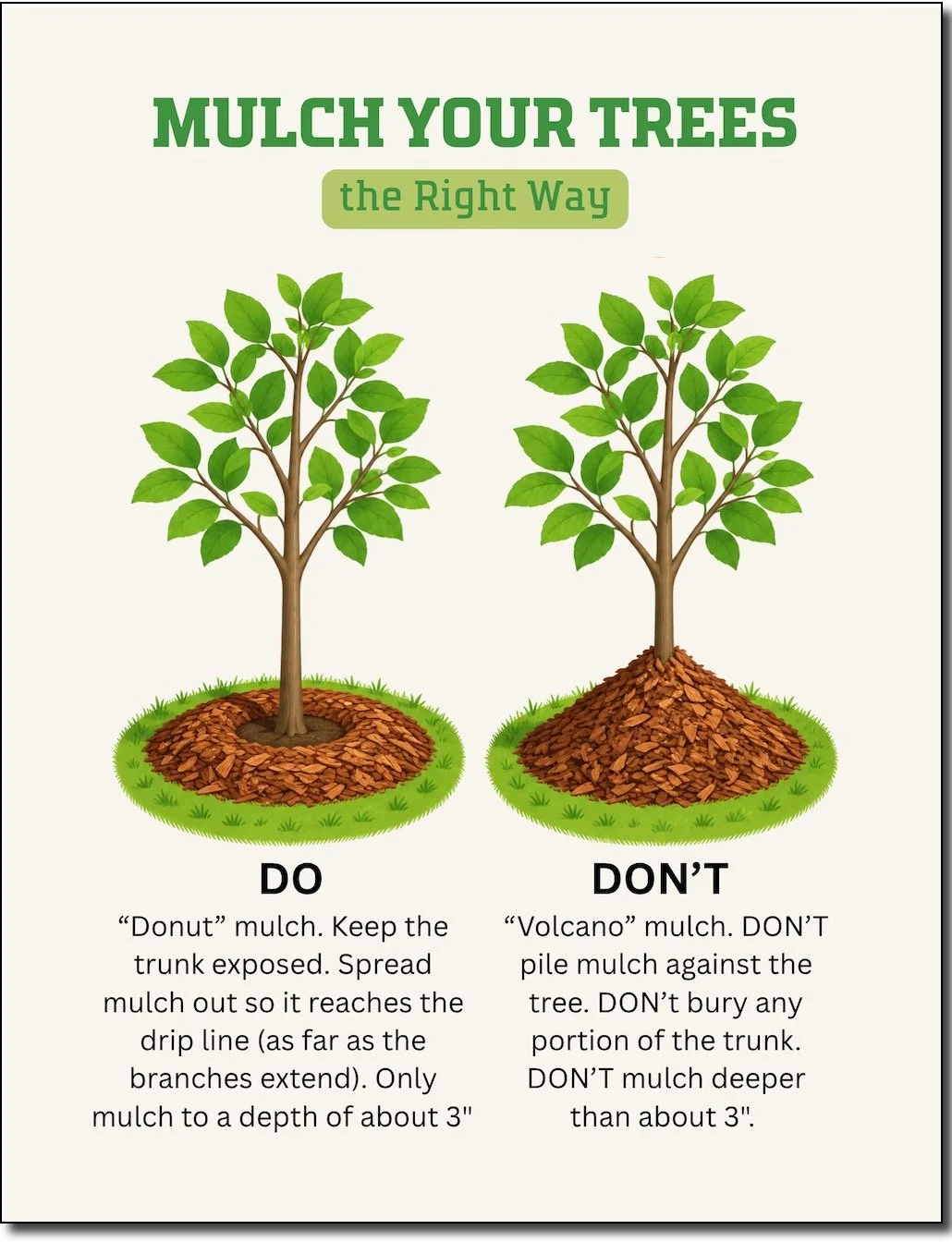
“Donut” mulch. Mulch in the shape of a donut. Create a hole in the middle of the mulch for the trunk. Do not allow anything to rest against the bark of the tree. Keep mulch, watering devices (like a tree ring or TreeDiaper), and soil pulled back 2”-3” away from the flare of the tree.
Mulch to a depth of about 3 inches. Three inches of organic material covers the soil and roots and prevents rapid evaporation during dry spells. Deeper than this can prevent water from reaching the roots. As the tree grows and you add mulch, ensure that you aren’t going deeper than this.
Mulch to the drip line. A tree’s roots extend out at least as far as the branches of the tree. This is called the drip line. As the tree grows, the drip line grows. Each year, as you renew your mulch, break up the previous layer of mulch and spread it out to the drip line before adding additional mulch. And again, only to a depth of about 3 inches.
Click the image to view; use the button to download a copy to your computer.
Ask an Arborist
FAQs about Mulching Trees
-
Actually, mounding, commonly known as volcano mulching, has never been recommended by arborists or horticulturists. It is more of a common practice passed along through habit by landscapers and homeowners.
-
Mulch deeper than 3” can actully prevent rain from reaching the roots of the tree. Three inches is enough to cover the soil and the roots and still allow air circulation and water penetration.
-
This is not recommended. First stone doesn’t add any nutrients to the soil because it never breaks down. In a forest, trees are naturally mulched by falling leaves and rotting branches, which return nutrients to the soil. Second, Rocks absorb and retain solar heat, and can create a microclimate that can superheat the soil stress delicate tree roots. Finally, research shows that maintaining a proper 2- to 3-inch deep ring of organic mulch around young or newly planted trees can dramatically boost growth rates.
-
This is the area below the tree covered by the branches. When it rains, the rain drips off the leaves in a circle. Of course, as the tree grows, so does the drip line.
-
Keep in mind that In a forest environment, trees self-mulch. While young trees planted in urban environments depend heavily on mulch to survive and grow, mature trees continue to benefit from it to prevent lawnmower damage, conserve moisture, and replicate a natural forest floor.