
Structural Pruning That Prevents Future Removals: Homeowner-Friendly Checks Before Storm Season
By Bob Hale
Mature trees are one of the best investments on a property — shade, storm buffering, wildlife habitat, and curb appeal. They are also one of the easiest assets to quietly undermine with a few years of deferred structural care. Most removal jobs I see after wind events did not start as sudden failures. They started as a fork that grew too upright, a co-dominant stem that never got reduced, or deadwood that should have come out the season before.
This piece is a practical, homeowner-level checklist you can walk with a clipboard. It is not a substitute for a certified arborist when a tree is large, leaning, or near power lines. It is meant to help you spot problems early — when a $200 structural prune can still prevent a $2,000 removal later.
Why “Wait Until it Looks Bad” Costs More
Trees compartmentalize injury; they do not “heal” the way skin does. Every poorly attached limb that later tears out leaves a larger wound, a larger decay pocket, and a shorter remaining service life. Industry guidance from the International Society of Arboriculture (ISA) and ANSI A300 pruning standards emphasizes that good pruning is selective and early, not topping or “lion’s-tailing” after a storm.
Storm season just makes the bill come due. High winds, ice, or saturated soils load the crown. The weak union fails first. If you only react after failure, you are buying removal plus cleanup, and often a stump or a hazard tree next door.
A 20-Minute Yard Walk (Do This Twice a Year)
Do one walk in late winter / early spring before leaves hide structure, and one again after the first big wind of the season.
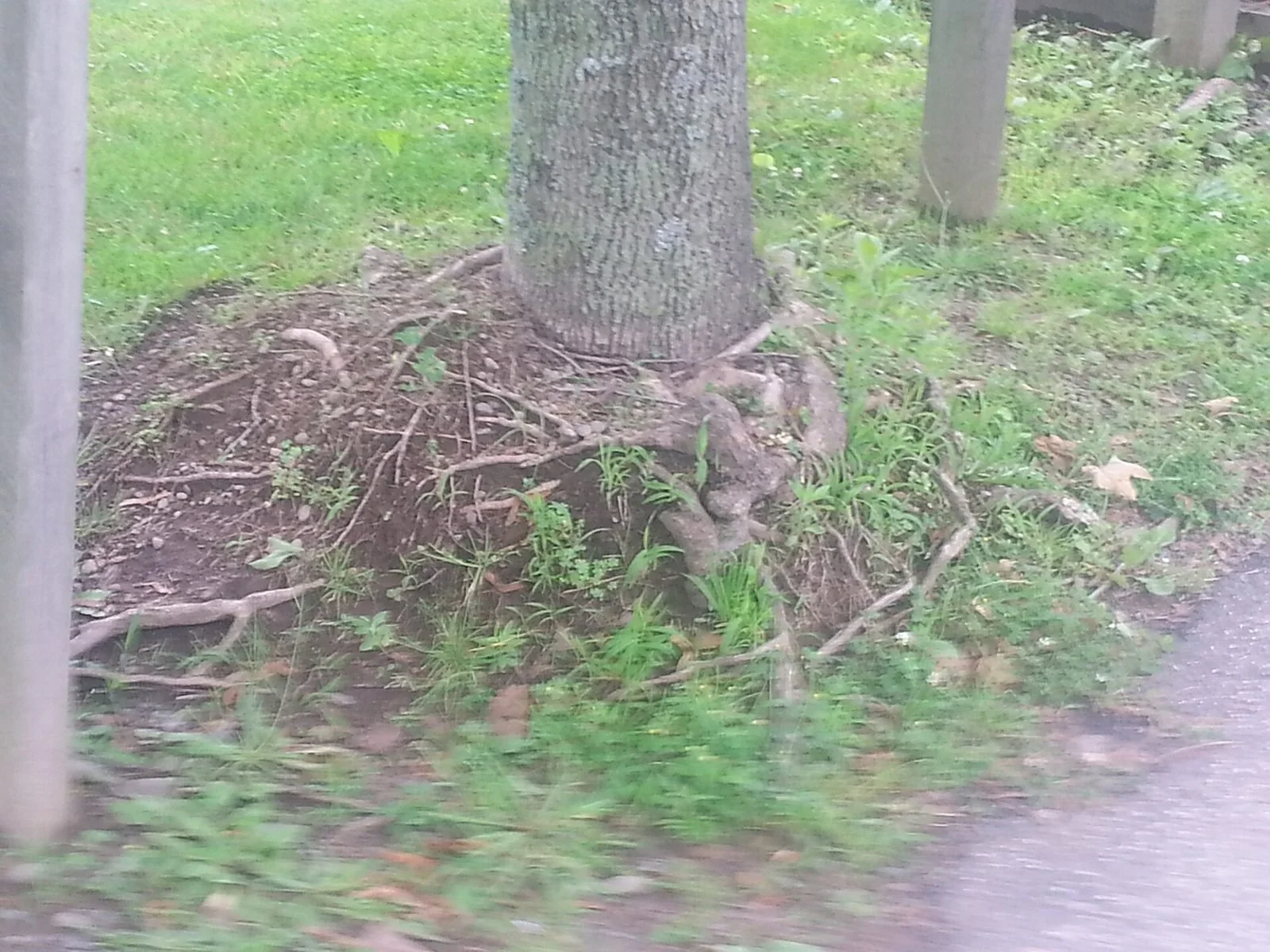
Mulch piled up against a trunk (a "mulch volcano"). CC BY 2.0. Credit: NY State IPM Program at Cornell University / Wikimedia Commons.
1. Look at the trunk flare and root plate Stand back 10–15 feet. Is the trunk rising cleanly from the soil, or is the flare buried under mulch volcanoes? Buried flares invite rot and girdling roots. Fresh soil heave, cracking, or a newly leaning trunk after rain is an emergency — keep people away and call a professional the same day.
2. Find the big forks Co-dominant stems (two leaders of similar size) with a tight, V-shaped crotch are classic failure points. A wider U-shaped attachment with a strong ridge of bark between the stems is usually safer. If you see included bark (a seam of bark pushed deep into the crotch), flag it for a pro. On younger trees, a certified arborist can often subordinate one stem with reduction cuts while the tree still has options.
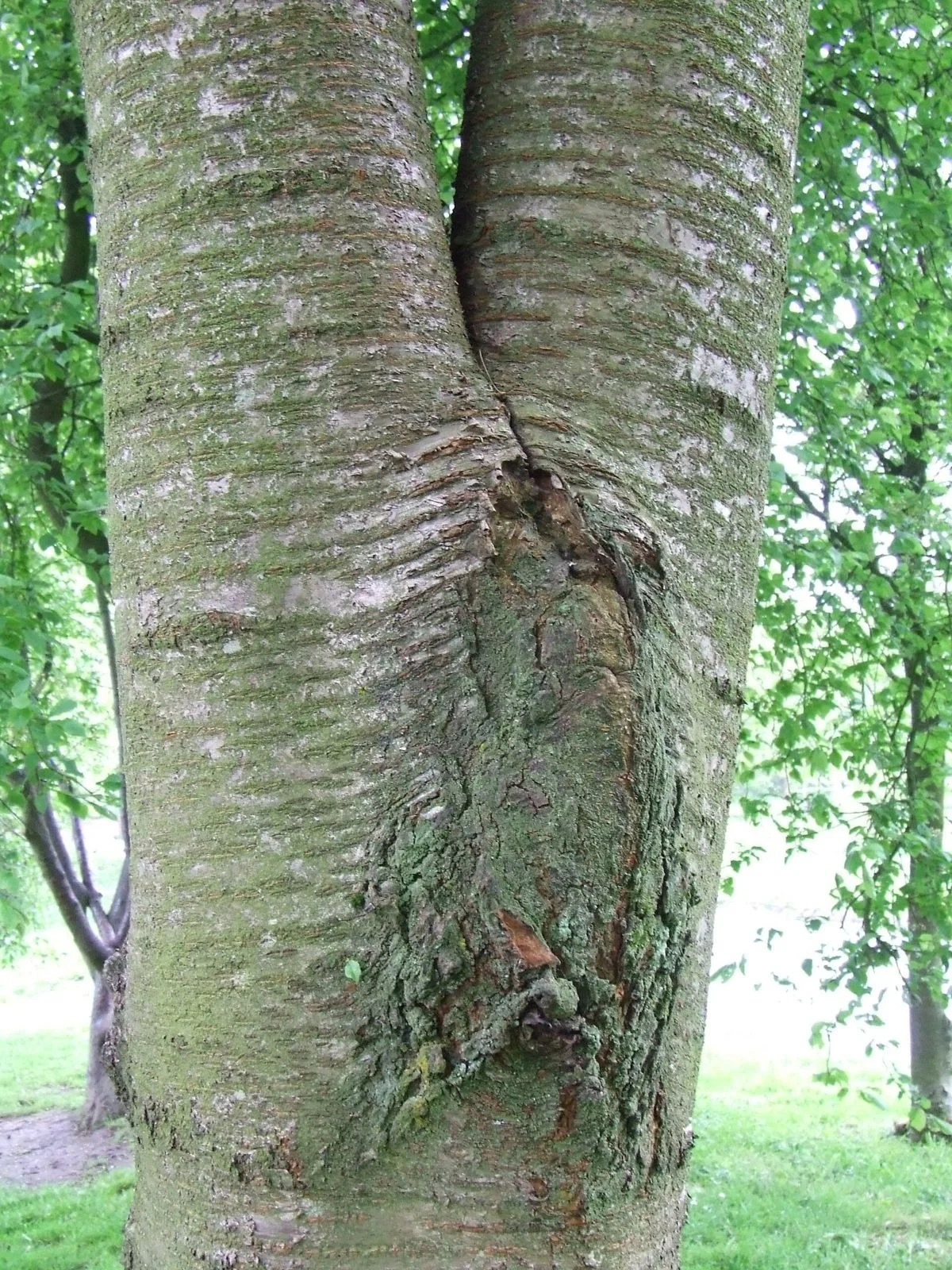
Included bark in a tight fork. CC BY-SA 3.0. Credit: Duncan R Slater / Wikimedia Commons.
3. Scan for dead, hanging, or rubbing wood Dead limbs do not flex; they snap. Rubbing branches create wounds that invite decay organisms. Homeowners can often remove small dead twigs with hand pruners; anything above shoulder height, near the house, or larger than about 2 inches in diameter is usually crew work with ropes and a chipper — not a ladder afternoon.
4. Check clearance and target zones Ask: if this limb failed, what would it hit — roof, driveway, play set, neighbor’s fence, service drop? Target risk matters as much as defect. A modest defect over a bedroom is more urgent than a similar defect over open lawn.
5. Note pests and pathogens without panicking Boring dust, oozing sap, fungal conks at the base, or sudden dieback in one section of crown deserve a closer look. One shelf fungus at the root collar is a structural red flag, not a cosmetic issue.
Structural Pruning vs. Cosmetic Pruning
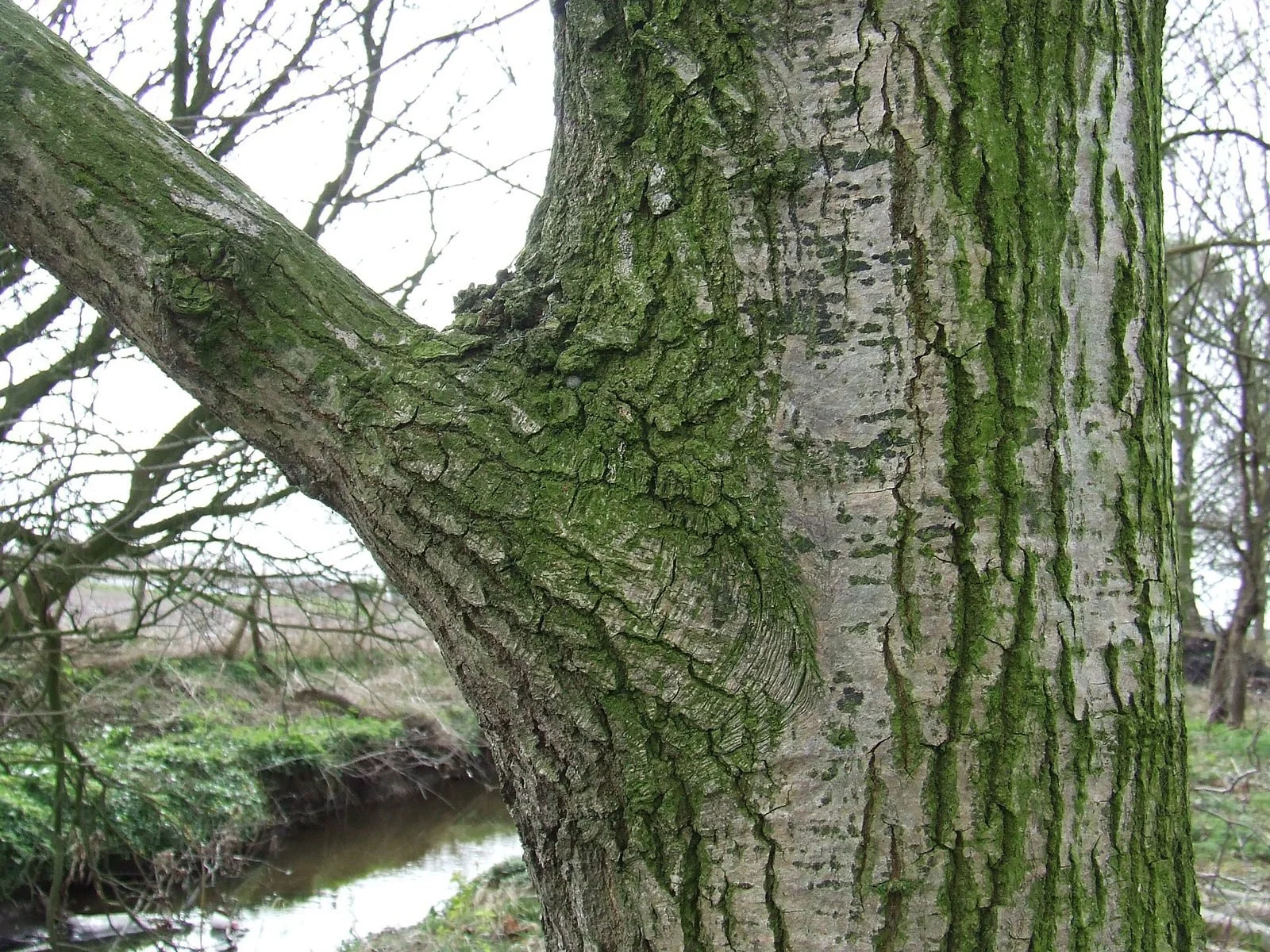
The branch collar on an oak. CC BY-SA 4.0. Credit: Duncan R Slater / Wikimedia Commons.
Cosmetic pruning is “make it look tidy.” Structural pruning is “build a durable framework.” For shade trees, the goals usually include:
• One dominant leader when the species supports it
• Well-spaced scaffold branches
• Removal or reduction of competing leaders
• Clearing of weak, crossing, or poorly attached wood
• Preserving live crown ratio so the tree keeps enough foliage to thrive
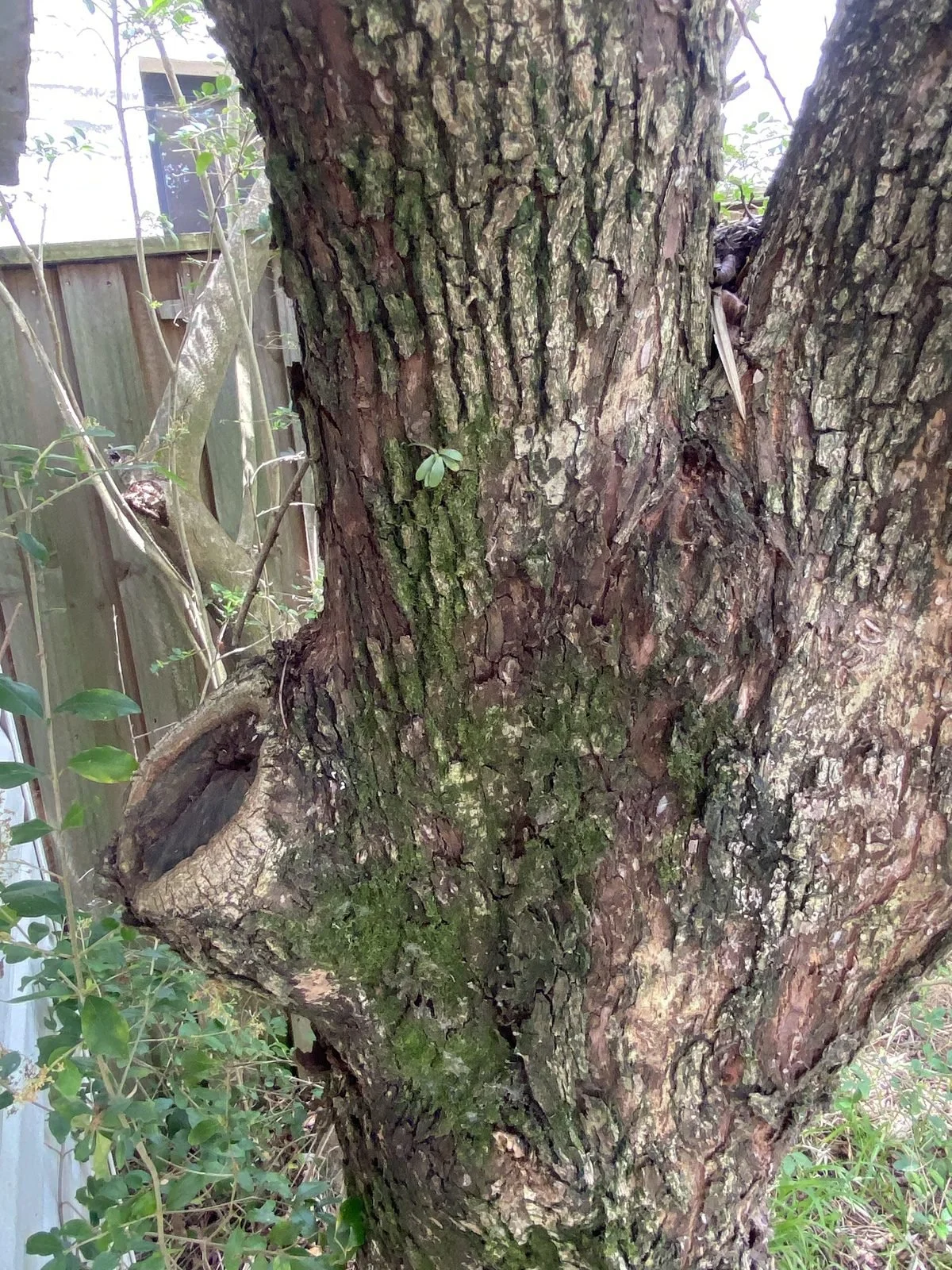
A cut made at the collar that has sealed over, showing what a good cut looks like a few years later. CC BY-SA 4.0. Credit: Kingjw4 / Wikimedia Commons.
What to avoid: topping (cutting main stems back to stubs), removing more than about 25% of live foliage in a single year on a healthy tree (rules of thumb vary by species and condition — when unsure, less is better), and flush cuts that remove the branch collar. Proper cuts are made just outside the branch collar so the tree can seal the wound.
Young trees (roughly the first 5–15 years after planting) give the best return on structural work. Correcting a bad fork at 3 inches diameter is cheap. Correcting it at 12 inches is expensive — or impossible without creating a large wound.
After the Storm: A 48-Hour and 2-Week Check
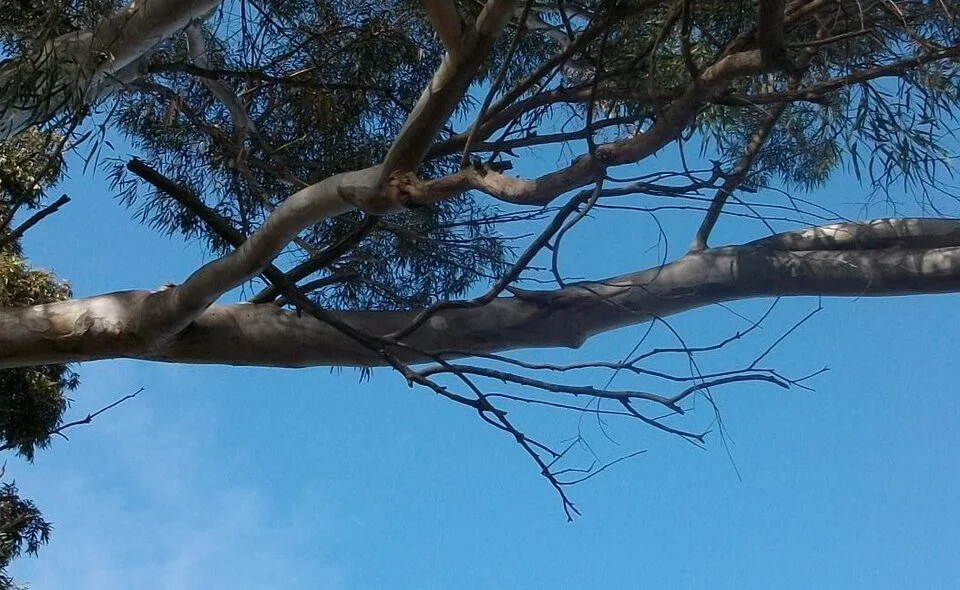
A dead branch broken off and hung up in the canopy over a house. CC BY-SA 3.0. Credit: Adrian J. Hunter / Wikimedia Commons.
Within 48 hours Stay clear of downed lines. Photograph hanging limbs (“widowmakers”) and call for professional removal — do not pull on them from below. Check for new leans, cracked trunks, and uplifted root plates.
About two weeks later Some failures are delayed. Saturated soils settle; cracked unions open further as the canopy reloads. Walk the same checklist again. Trees that looked “fine” on day one sometimes declare themselves later.
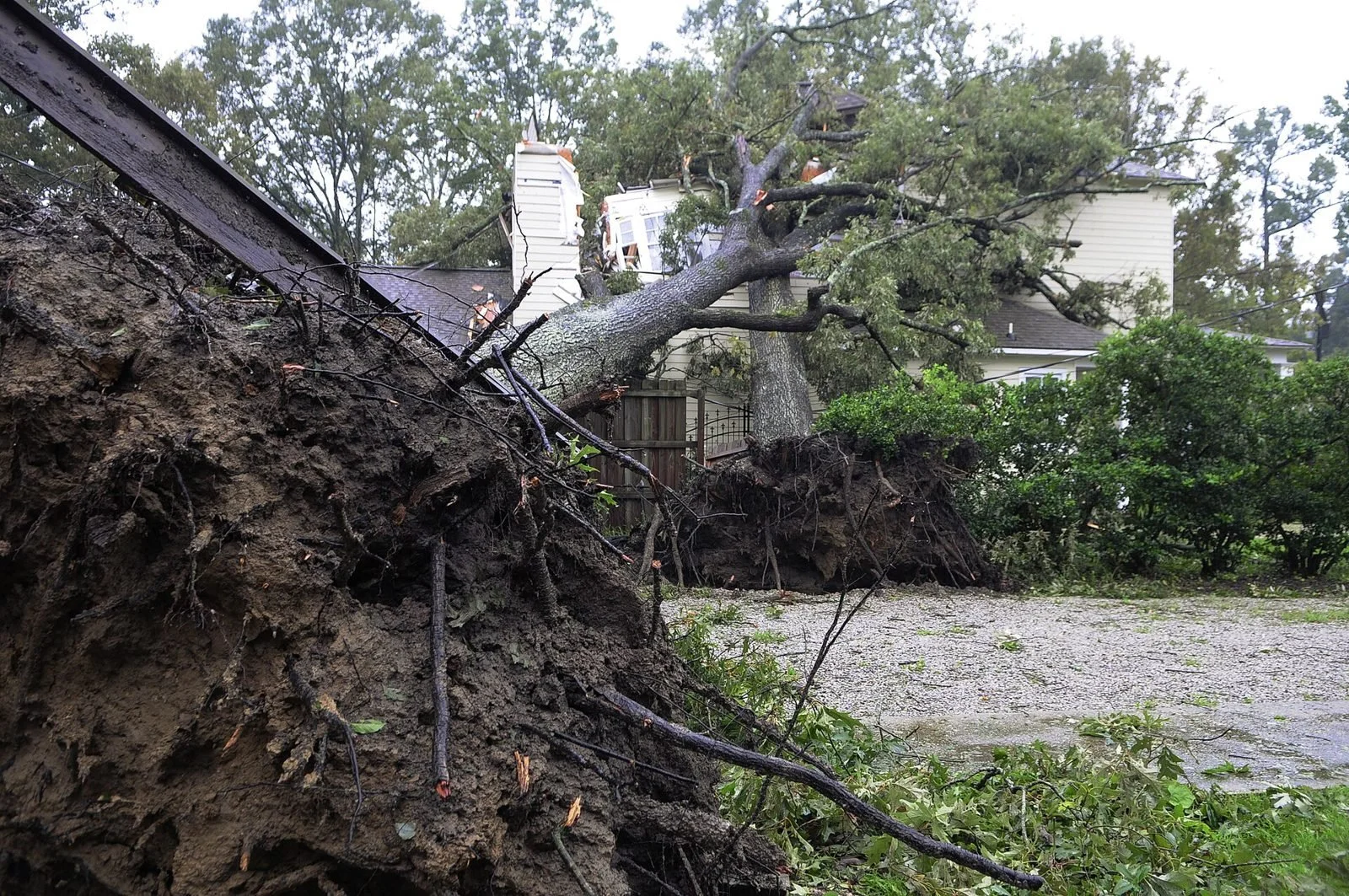
A wind-thrown tree with its root plate pulled up next to a house (Baton Rouge, 2008). Credit: Barry Bahler / FEMA
When DIY Stops Being Reasonable
Call a qualified tree care professional (look for ISA Certified Arborist credentials and proper insurance) when:
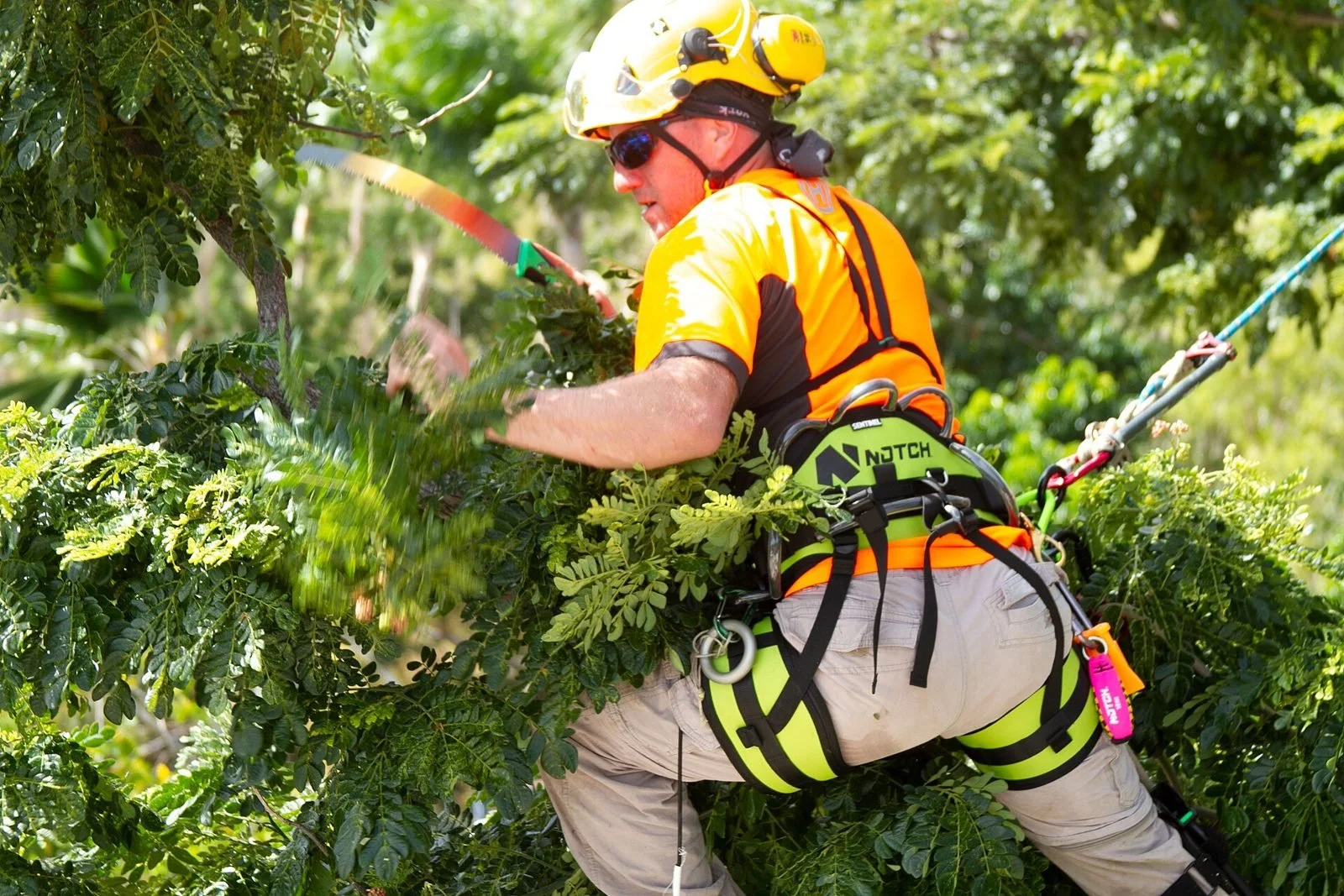
An arborist in a harness cutting out dead limbs. CC BY-SA 4.0. Credit: TreeMinion15 / Wikimedia Commons.
• Work requires a chainsaw above your head or from a ladder
• The tree is within falling distance of a structure or roadway
• You see root-plate movement, trunk cracks, or large fungal fruiting bodies
• Utility lines are involved (call the utility — never self-clear near energized lines)
Good crews will explain options: prune and monitor, cable/brace in limited cases, or remove. Be wary of anyone whose only tool is “cut it all down today” without explaining risk and alternatives.
A Short Seasonal Habit That Pays Off
Put two calendar reminders on your phone: one for a late-winter structure walk, one for a post-storm follow-up. Keep a simple photo log of problem forks year over year. Trees change slowly until they change suddenly; the photo history helps you (and an arborist) see trends.
Protecting mature canopy is cheaper than replacing it — in dollars, in cooling costs, and in the character of a street. Structural pruning is not about making trees look “done.” It is about giving them a framework that can ride out the next hard wind.
Author Bio
Bob Hale works with Garlick Media and supports field-facing tree care brands including Albuquerque Tree Pros (albuquerquetreepros.com) and Idaho Falls Tree Pros (idahofallstreepros.com). He writes practical homeowner guides on urban tree care, storm response, and when to call a pro. Contact: bob-hale@agentmail.to
Suggested further reading
• International Society of Arboriculture — consumer tree care resources (isa-arbor.com)
• ANSI A300 pruning standards (overview via ISA / TCIA)
• Local cooperative extension urban forestry pages for region-specific species lists
