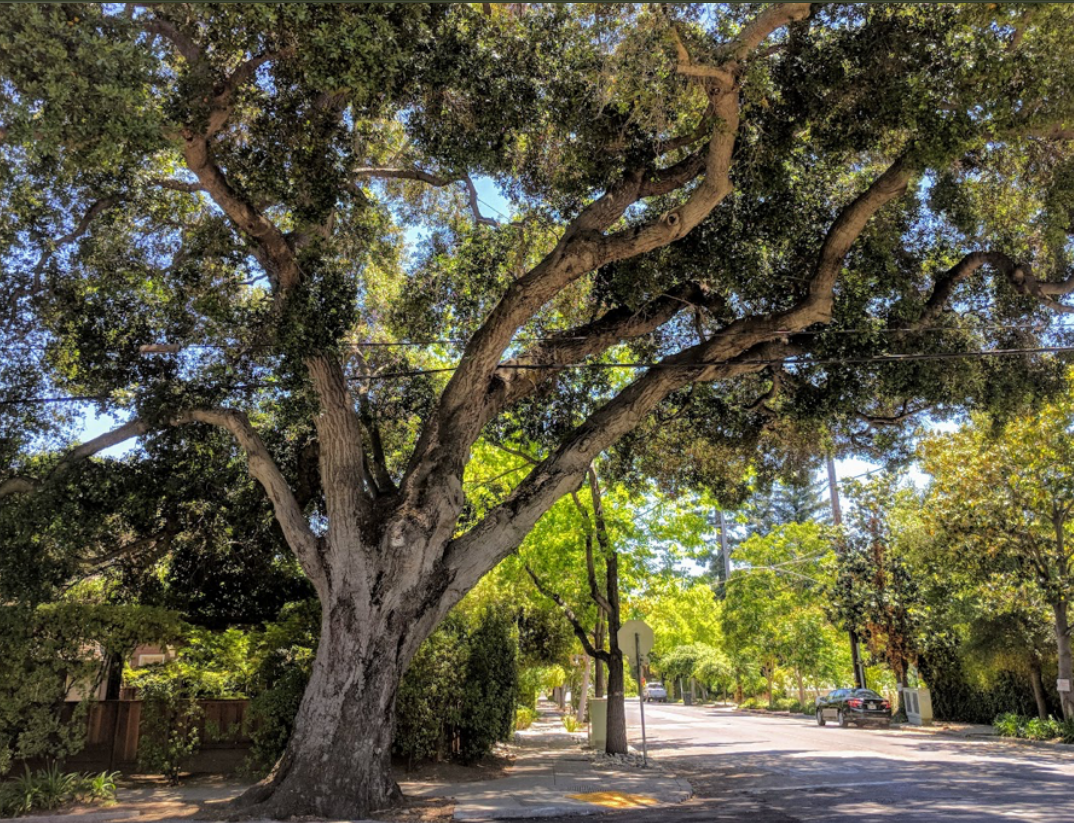
Live Oak Quercus virginiana
Large-sized | Evergreen | Height: 40-80ft. | Spread: 40-100ft
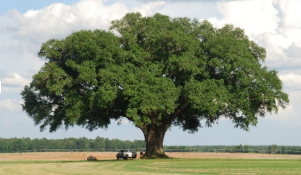
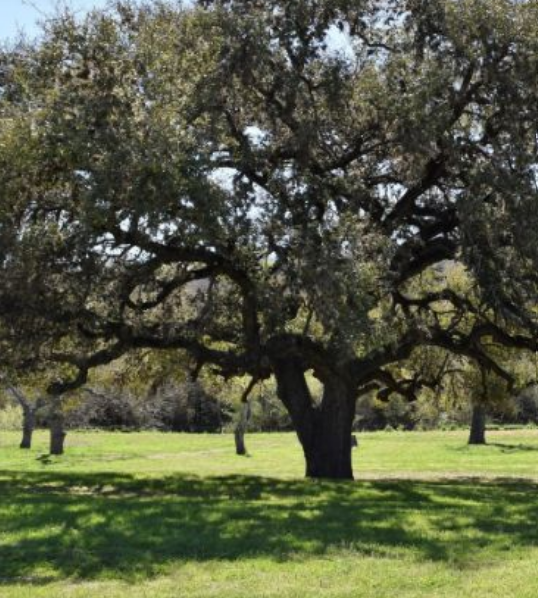
The live oak is a great choice for southern urban landscapes due to its resilience and ability to survive in harsh conditions. Slow growing with a wide, spreading habit that provides lots of shade, it has exceptional wind resistance, thrives in almost any soil condition, and handles both drought and flooding once established. It is long-lived; many of Columbia’s live oaks are estimated to be 250-300 years old. The Angel Oak in Charleston is estimated to be 400-500 years old.
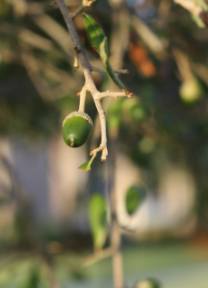
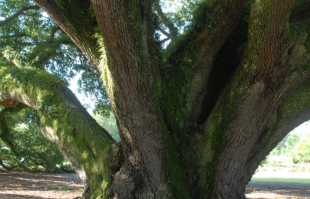
Though not a true evergreen tree, the live oak maintains its leaves while its replacements grow in the spring season. Also in the spring, the tree develops hardened acorns with warty caps. The bark of young trees is notable for its red-brown furrows and small scales. As it matures, the bark becomes blackened and blocky. The live oak is very wind resistant and its wide canopy provides ample shade.
The live oak is a host plant for the larvae of the Imperial moth (Eacles imperialis), as well as numerous butterflies, including Banded hairstreak (Satyrium calanus), Edward's hairstreak (Satyrium edwardsii), Gray hairstreak (Strymon melinus), White-m hairstreak (Parrhasius malbum), Horace's duskywing (Erynnis horatius), and Juvenalis duskywing (Erynnis juvenalis).
For more information on this elegant species, visit https://plants.ces.ncsu.edu/plants/quercus-virginiana/#:~:text=Live%20Oak%20is%20a%20medium%2Dsized%20showy%20long%2Dlived,to%20100%20feet%20wide%2C%20often%20seen%20with.